Link Copied!
Carl Jung Quotes (1875-1961)














About Carl Jung
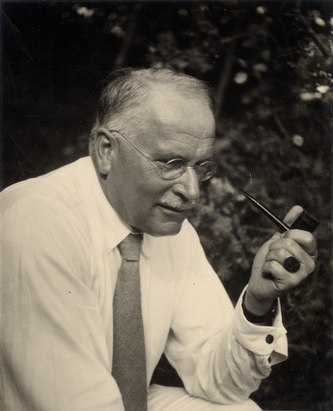
Carl Gustav Jung (IPA: ˈkarl ˈgʊstaf ˈjʊŋ) (26 July 1875 – 6 June 1961) was a Swiss psychiatrist and founder of analytical psychology.
Best Carl Jung Quotes
Shortest
Earliest
Explore our curated collection of the most famous and impactful Carl Jung quotes.

“Man needs difficulties; they are necessary for health.”

“The bigger the crowd, the more negligible the individual.”
“If one does not understand a person, one tends to regard him as a fool.”
“Our blight is ideologies — they are the long-expected Antichrist!”

“The meaning and design of a problem seem not to lie in its solution, but in our working at it incessantly.”
“No psychic value can disappear without being replaced by another of equivalent intensity.”
“The healthy man does not torture others—generally it is the tortured who turn into torturers.”
“It is sometimes difficult to avoid the impression that there is a sort of foreknowledge of the coming series of events.”
“The meeting of two personalities is like the contact of two chemical substances: if there is any reaction, both are transformed.”
“But we must not forget that only a very few people are artists in life; that the art of life is the most distinguished and rarest of all the arts.”

“Seldom, or perhaps never, does a marriage develop into an individual relationship smoothly and without crises; there is no coming to consciousness without pain.”

“The growth of the mind is the widening of the range of consciousness, and ... each step forward has been a most painful and laborious achievement.”
“Emotion is the chief source of all becoming-conscious. There can be no transforming of darkness into light and of apathy into movement without emotion.”
“All ordinary expression may be explained causally, but creative expression which is the absolute contrary of ordinary expression, will be forever hidden from human knowledge.”
“We are so captivated by and entangled in our subjective consciousness that we have forgotten the age-old fact that God speaks chiefly through dreams and visions.”
“So it is that you come to know what a real God is. … The God wants my life. He wants to go with me, sit at the table with me, work with me. Above all he wants to be ever-present.”

“Every step closer to my soul excites the scornful laughter of my devils, those cowardly ear-whisperers and poison-mixers. It was easy for them to laugh, since I had to do strange things.”
“This whole creation is essentially subjective, and the dream is the theater where the dreamer is at once scene, actor, prompter, stage manager, author, audience, and critic.”

“For it all depends on how we look at things, and not on how they are in themselves. The least of things with a meaning is worth more in life than the greatest of things without it.”
Carl Jung Quotes by Topic
Find exactly what you are looking for by browsing this categorized list of Carl Jung quotes by topic.
Carl Jung on Synchronicity 8 quotes
“When coincidences pile up in this way, one cannot help being impressed by them – for the greater the number of terms in such a series, or the more unusual its character, the more improbable it becomes.”

Carl Jung on Unconscious 4 quotes
“The conscious mind allows itself to be trained like a parrot, but the unconscious does not — which is why St. Augustine thanked God for not making him responsible for his dreams.”

Carl Jung on Dreams 3 quotes
“We are so captivated by and entangled in our subjective consciousness that we have forgotten the age-old fact that God speaks chiefly through dreams and visions.”

Carl Jung on Bardo Thodol 3 quotes
“For years, ever since it was first published, the Bardo Thodol has been my constant companion, and to it I owe not only many stimulating ideas and discoveries, but also many fundamental insights.”
Carl Jung on Philosopher's stone 2 quotes
“Explained briefly in more modern terms by Carl G. JUNG, the alchemical process, or Great Work, begins with blackness (nigredo), either present from the beginning or produced by separation of the elements. A union of opposites occurs, often represented by a marriage (coniunctio) of male and female. This union is followed by the death of the product of their union and a corresponding nigredo. At this point, a washing leads to the whitening stage (albedo), which is highly prized as the silver or moon condition. However, this is not the final product, as it must still reach the sun stage or rubedo condition, accomplished by raising the heat of the fire to its highest intensity (pp. 230-2)”
Carl Jung on Antichrist
“Our blight is ideologies — they are the long-expected Antichrist!”
Carl Jung on Self
“Everything that irritates us about others can lead us to an understanding of ourselves.”

Carl Jung on Pendulum
“The pendulum of the mind alternates between sense and nonsense, not between right and wrong.”

Carl Jung on Theosophy
“We have not yet clearly grasped the fact that Western Theosophy is an amateurish imitation of the East.”

Carl Jung on Existence
Carl Jung on Future
“It is sometimes difficult to avoid the impression that there is a sort of foreknowledge of the coming series of events.”

What Carl Jung Said About Others
Discover personal opinions Carl Jung shared regarding contemporaries.
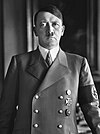
Carl Jung on Adolf Hitler 3 quotes
“We do not know whether Hitler is going to found a new Islam. He is already on the way; he is like Mohammad. The emotion in Germany is Islamic; warlike and Islamic. They are all drunk with wild god. That can be the historic future.”
Carl Jung on Søren Kierkegaard
“For all its critical analysis philosophy has not yet managed to root out its psychopaths. What do we have psychiatric diagnosis for? That grizzler Kierkegaard also belongs in this galere.”

Carl Jung on Sigmund Freud
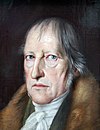
Carl Jung on Georg Wilhelm Friedrich Hegel
“Of the nineteenth-century philosophers, Hegel put me off by his language, as arrogant as it was laborious; I regarded him with downright mistrust. He seemed to me like a man who was caged in the edifice of his own words and was pompously gesticulating in his prison.”
Carl Jung on D. T. Suzuki
“Suzuki's works on Zen Buddhism are among the best contributions to the knowledge of living Buddhism… We cannot be sufficiently grateful to the author, first for the fact of his having brought Zen closer to Western understanding, and secondly for the manner in which he has achieved this task.”

Carl Jung on Franklin D. Roosevelt
“I have just come from America, where I saw Roosevelt. Make no mistake, he is a force — a man of superior and impenetrable mind, but perfectly ruthless — a highly versatile mind which you cannot foresee. He has the most amazing power complex, the Mussolini substance, the stuff of a dictator absolutely.”

Carl Jung on Arthur Schopenhauer
“He was the first to speak of the suffering of the world, which visibly and glaringly surrounds us, and of confusion, passion, evil — all those things which the [other philosophers] hardly seemed to notice and always tried to resolve into all-embracing harmony and comprehensiblility. Here at last was a philosopher who had the courage to see that all was not for the best in the fundaments of the universe.”

Carl Jung on Baruch Spinoza
“From Descartes and Malebranche onward, the metaphysical value of the “idea” or archetype steadily deteriorated. It became a “thought,” an internal condition of cognition, as clearly formulated by Spinoza: “By 'idea' I understand a conception of the mind which the mind forms by reason of its being a thinking thing.” Finally Kant reduced the archetypes to a limited number of categories of understanding.”

Carl Jung on Richard Wilhelm
“As a young man Wilhelm had gone to China in the service of a Christian mission, and there the mental world of the Orient had opened its doors wide to him. Wilhelm was a truly religious spirit, with an unclouded and farsighted view of things. He had the gift of being able to listen without bias to the revelations of a foreign mentality, and to accomplish that miracle of empathy which enabled him to make the intellectual treasures of China accessible to Europe. He was deeply influenced by Chinese culture, and once said to me, "It is a great satisfaction to me that I never baptized a single Chinese!" In spite of his Christian background, he could not help recognizing the logic and clarity of Chinese thought. [...] Clear and unmistakably Western as his mentality was, in his I Ching commentary he manifested a degree of adaptation to Chinese psychology which is altogether unmatched.”
Quotes About Carl Jung
Gain deeper perspective through quotes about Carl Jung from others.
Clarissa Pinkola Estés on Carl Jung 2 quotes
“Jung drew a circle and divided it into four parts, and said a man is three-quarters masculine and one quarter feminine. A woman is three-quarters feminine and one quarter masculine. And that’s a good start. The problem is that he says this is the way it should be, and that’s not the way it is. It is too rigid a form. Some men I have met are three-quarters feminine and one-quarter masculine, and the one-quarter masculine they are — jump back — very strong, fuerte, strong! But they have tremendous feminine development because it is who they are. It is from the souls, not an overlay from cultural family. Gloria Steinem is a great example of a woman who has far more masculine development then she has feminine development. Although now her feminine development appears as though it is coming now. She is 55 -60 years old and now it is coming. So whatever we have, as you know, the role in life is to develop it to its fullness. But also the challenges is to develop its balance, which is also its opposite.”
Morton Kelsey on Carl Jung 2 quotes
“According to Jung dreams have many functions for the individual. They first of all compensate for the one-sided conscious attitude of the individual... these experiences tend to balance a person's conscious, outer life. They also reveal those things of which the individual wishes to remain unaware, confronting him with desires he has not faced up to. But dreams do more than this: they give intimations of meaning and reality which the individual has not yet touched, and they can even give directions for achieving this meaning and reality.”
Lewis Mumford on Carl Jung
“Whereas Freud was for the most part concerned with the morbid effects of unconscious repression, Jung was more interested in the manifestations of unconscious expression, first in the dream and eventually in all the more orderly products of religion and art and morals.”

F. David Peat on Carl Jung
“When Carl Jung classified the "rational" functions of the mind he divided them into thinking and feeling. We often consider feeling to be loose and nebulous, but for Jung it was one of the mind's strictly rational functions. Feeling, for Jung, is what assesses the inherent value of things. Feeling looks at the world globally rather than analytically. If thought is not balanced by feeling, then it can become obsessive and one-tracked, giving no attention to the overall meaning of what one is doing. Conversely, if feeling is not tempered by thought, then we are in danger of rushing into events with great enthusiasm and conviction without making proper plans or understanding possible pitfalls.”
Jane Roberts on Carl Jung
“There are also root dreams shared by the race as a whole. Most of these are not as symbolic as Jung thought them to be but are literal interpretations of the abilities used by the inner self. For that matter, as you know, flying dreams need not be symbolic of anything.”
Muriel Rukeyser “The Education of a Poet” on Carl Jung
“Much later I read Jung, and when I went to Ireland I heard about an analyst who believed that what you are dominated by in your childhood is whatever your parents really love. I believe that now. I believe that I was dominated by what my father and my mother loved; it came through to me as deep sexuality centered in that forbidden aunt who was the figure of passion and sex in my early life, and through the opera singers and composers of the music that meant so much to them, and through the popular music of that time and the happiness of the young people who sat on the stoops and sang, and through the sadness my parents felt at that custom going out of the city.”
Colin Wilson on Carl Jung 2 quotes
“For Jung, the 'psychic world' (i.e. the world of the mind) was an independent reality, and it was possible to travel there and make the acquaintance of its inhabitants.”

Misattributed Quotes
Quotes mistakenly credited to Carl Jung
About Carl Jung
Carl Gustav Jung (IPA: ˈkarl ˈgʊstaf ˈjʊŋ) (26 July 1875 – 6 June 1961) was a Swiss psychiatrist and founder of analytical psychology.