Link Copied!
C. West Churchman Quotes (1913-2004)
Philosopher, Scientist

About C. West Churchman
Charles West Churchman (29 August 1913 – 21 March 2004) was an American philosopher and systems scientist, known for his pioneering work in operations research, system analysis and ethics.
Best C. West Churchman Quotes
Shortest
Earliest
Explore our curated collection of the most famous and impactful C. West Churchman quotes.
“To know that we are measuring real change we need to have a strong theoretical base.”

“The problem of systems improvement is the problem of the 'ethics of the whole system'.”

“The systems approach goes on to discovering that every world-view is terribly restricted.”
“Operations research '(OR) is the securing of improvement in social systems by means of scientific method”

“When one is considering systems it's always wise to raise questions about the most obvious and simple assumptions.”


“We are always obliged to think about the larger system. If we fail to do this, then our thinking becomes fallacious.”
“This text is oriented toward human organizations since this has been the emphasis in the practice of O.R. in business and industry.”
“The complete analysis of the methods of scientific inference shows that the theory of inference in science demands the use of ethical judgments”
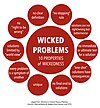
“What seems to emerge is not a moral reprimand of the management scientist, but rather a moral problem of the profession, a wicked moral problem.”
“Design, properly viewed, is an enormous liberation of the intellectual spirit, for it challenges this spirit to an unbounded speculation about possibilities.”

“This text grew from the lecture material for the "Short Course in Operations Research" which has been offered annually (since 1952) by Case Institute of Technology.”

“The comprehensiveness of OR’s aim is an example of a ‘systems’ approach, since ‘system’ implies an interconnected complex of functionally related components.”
“How can we design improvement in large systems without understanding the whole system, and if the answer is that we cannot, how is it possible to understand the whole system?”

“If the chance of error alone were the sole basis for evaluating methods of inference, we would never reach a decision, but would merely keep increasing the sample size indefinitely.”
“Inquiry is the creation of knowledge or understanding; it is the reaching out of a human being beyond himself to a perception of what he may be or could be, or what the world could be or ought to be.”

“I am often inclined to put the implementation questions first, ie, "Can anything be changed?" Should the implementation question not accompany the whole process from its very beginning to its very end?”
“There would be cases where we would not want to accept an hypothesis even though the evidence gives a high d.c. [degree of confirmation] score, because we are fearful of the consequences of a wrong decision.”

“However a systems problem is solved—by a planner, scientist, politician, antiplanner, or whomever—the solution is wrong, even dangerously wrong. There is bound to be deception in any approach to the system.”
“The religious Weltanschauung, … describes a certain kind of relationship – such as love, adoration and obedience – between men and other men, or between men and some superior being. or between men and "Nature".”
C. West Churchman Quotes by Topic
Find exactly what you are looking for by browsing this categorized list of C. West Churchman quotes by topic.
C. West Churchman on Management science 3 quotes
“We have overwhelming evidence that available information plus analysis does not lead to knowledge. The management science team can properly analyse a situation and present recommendations to the manager, but no change occurs. The situation is so familiar to those of us who try to practice management science that I hardly need to describe the cases.”
C. West Churchman on Operations research 2 quotes
“OR is the securing of improvement in social systems by means of scientific method”

C. West Churchman on Systems thinking 2 quotes
“A systems approach begins when first you see the world through the eyes of another.”

C. West Churchman on Approach 2 quotes
“The systems approach goes on to discovering that every world-view is terribly restricted.”

C. West Churchman on Manager 2 quotes
“We have overwhelming evidence that available information plus analysis does not lead to knowledge. The management science team can properly analyse a situation and present recommendations to the manager, but no change occurs. The situation is so familiar to those of us who try to practice management science that I hardly need to describe the cases.”

C. West Churchman on Problem solving 2 quotes
“The design of my philosophical life is based on an examination of the following question: is it possible to secure improvement in the human condition by means of the human intellect? The verb 'to secure' is (for me) terribly important, because problem solving often appears to produce improvement, but the so-called 'solution' often makes matters worse in the larger system...”

C. West Churchman on World view
“The systems approach goes on to discovering that every world-view is terribly restricted.”

C. West Churchman on Holism
“Holism traditionally says that a collection of beings may have a collective property that cannot be inferred from the properties of its members.”

C. West Churchman on Wicked problem
C. West Churchman on Conceptual model
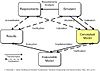
“Scientists whose work has no clear, practical implications would want to make their decisions considering such things as: the relative worth of (1) more observations, (2) greater scope of his conceptual model, (3) simplicity, (4) precision of language, (5) accuracy of the probability assignment.”
C. West Churchman on System
“It is sheer nonsense to expect that any human being has yet been able to attain such insight into the problems of society that he can really identify the central problems and determine how they should be solved. The systems in which we live are far too complicated as yet for our intellectual powers and technology to understand.”
C. West Churchman on Systems theory
“It is sheer nonsense to expect that any human being has yet been able to attain such insight into the problems of society that he can really identify the central problems and determine how they should be solved. The systems in which we live are far too complicated as yet for our intellectual powers and technology to understand.”
C. West Churchman on Scientific modelling
“For the scientist a model is also a way in which the human though processes can be amplified. This method often takes the form of models that can be programmed into computers. At no point, however, the scientist intend to loose control of the situation because off the computer does some of his thinking for him. The scientist controls the basic assumptions and the computer only derives some of the more complicated implications.”

C. West Churchman on Mathematics
“The theory of the nature of mathematics is extremely reactionary. We do not subscribe to the fairly recent notion that mathematics is an abstract language based, say, on set theory. In many ways, it is unfortunate that philosophers and mathematicians like Russell and Hilbert were able to tell such a convincing story about the meaning-free formalism of mathematics. In Greek, mathematics simply meant learning, and we have adapted this... to define the term as "learning to decide." Mathematics is a way of preparing for decisions through thinking. Sets and classes provide one way to subdivide a problem for decision preparation; a set derives its meaning from decision making, and not vice versa.”

What C. West Churchman Said About Others
Discover personal opinions C. West Churchman shared regarding contemporaries.
Quotes About C. West Churchman
Gain deeper perspective through quotes about C. West Churchman from others.
Theodore R. Sarbin on C. West Churchman
“Prediction of events is a central problem to which students of decision making have also addressed themselves. See, for example, Simon (1957), Churchman (1948), Bross (1953).”
George Klir cited in on C. West Churchman
“General systems theory is considered as a formal theory (Mesarovic, Wymore), a methodology (Ashby, Klir), a way of thinking (Bertalanffy, Churchman), a way of looking at the world (Weinberg), a search for an optimal simplification (Ashby, Weinberg), didactic method (Boulding, Klir, Weinberg), metalanguage (Logren), and profession (Klir).”
Robert L. Flood on C. West Churchman
“Churchman recognized in his critical systemic thinking that the human mind is not able to know the whole. … Yet the human mind, for Churchman, may appreciate the essential quality of the whole. For Churchman, appreciation of this essential quality begins … when first you see the world through the eyes of another. The systems approach, he says, then goes on to discover that every worldview is terribly restricted. Consequently, with Churchman, a rather different kind of question about practice surfaces. … That is, who is to judge that any one bounded appreciation is most relevant or acceptable? Each judgment is based on a rationality of its own that chooses where a boundary is to be drawn, which issues and dilemmas thus get on the agenda, and who will benefit from this. For each choice it is necessary to ask, What are the consequences to be expected insofar as we can evaluate them and, on reflection, how do we feel about that? As Churchman points out, each judgment of this sort is of an ethical nature since it cannot escape the choice of who is to be the client—the beneficiary—and thus which issues and dilemmas will be central to debate and future action. In this way, the spirit of C. West Churchman becomes our moral conscience. A key principle of systemic thinking, according to Churchman, is to remain ethically alert. Boundary judgments facilitate a debate in which we are sensitized to ethical issues and dilemmas.”
Fred Collopy on C. West Churchman
“Systems thinking, as written about and practiced by Russell Ackoff, C. West Churchman, Peter Checkland and others, contained within it many of the impulses that motivate the application of design ideas to strategy, organization, society, and management. Ideas such as engaging a broad set of stakeholders, moving beyond simple metrics and calculations, considering idealized options and using scenarios to explore them, shifting boundaries to reframe problems, iteration, the liberal use of diagrams and rich pictures, and tirelessly searching for a better set of alternatives were all there. If the business and management community had bought it, we would not be having the many discussions about design, design thinking, and expanding management education to engage the intuitive, to embrace values, to look beyond available choices'''.”
Quote from Lars Paul on C. West Churchman
“Managers within organizations sometimes confront a type of problem that is difficult to solve, in part, because the problems involve many stakeholders with diverse perspectives. The different assumptions from each perspective result in differing views of the problem and potential solutions. It is difficult to produce a satisfactory potential solution when the formulation of the problem definition is the major concern and when applying a potential solution risks unintended consequences. Churchman (1967, p. 141) writes that the solutions proposed to solve these problems "often turned out to be worse than the symptoms"”
About C. West Churchman
Charles West Churchman (29 August 1913 – 21 March 2004) was an American philosopher and systems scientist, known for his pioneering work in operations research, system analysis and ethics.