Gandhi (1933) referred to Rajaji, as quoted in V. Venkatesan. "Political pragmatist" on frontline.in, 2009. Accessed 26 November 2013.
• Gandhi referred to Rajaji, on the eve of his 21 days fast in May 1933, because of the latter’s questioning spirit.
• Gandhi referred to Rajaji, on the eve of his 21 days fast in May 1933, because of the latter’s questioning spirit.
“
His conscience-keeper.
— Gandhi
What It Means
This is a placeholder explanation generated by the low-overhead model. It interprets "His conscience-keeper." in the context of "Gandhi (1933) referred to Rajaji, as quoted in V. Venkatesan. "Political pragmatist" on frontline.in, 2009. Accessed 26 November 2013.
• Gandhi referred to Rajaji, on the eve of his 21 days fast in May 1933, because of the latter’s questioning spirit." to mean that wisdom is timeless.

Source: Wikiquote: "C. Rajagopalachari" (Quotes about Rajaji)
The 'What it means' explanation text was generated by Google Gemini Flash (accessed January 18, 2026). https://gemini.google.com/app
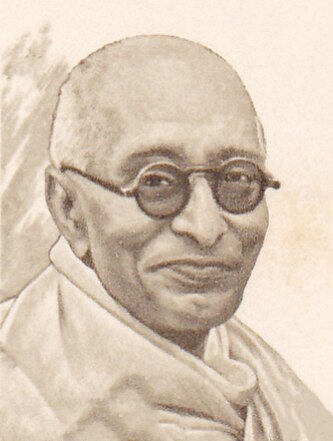
About C. Rajagopalachari
Chakravarti Rajagopalachari (10 December 1878 – 25 December 1972), informally called Rajaji or C.R., was an Indian lawyer, independence activist, politician, writer and statesman. Rajagopalachari was the last Governor-General of India. He also served as leader of the Indian National Congress, Premier of the Madras Presidency, Governor of West Bengal, Minister for Home Affairs of the Indian Union and Chief Minister of Madras state.
View all quotes →