It is true that our everyday view of the world is not quite naively realistic, but that is what it would like to be. Common-sense is naively realistic wherever it does not think that there is some positive reason why it should cease to be so. And this is so in the vast majority of its perceptions. When we see a tree we think that it is really green and really waving about in precisely the same way as it appears to be. We do not think of our object of perception being 'like' the real tree, we think that what we perceive is the tree, and that it is just the same at a given moment whether it be perceived or not, except that what we perceive may be only a part of the real tree.
What It Means
This is a placeholder explanation generated by the low-overhead model. It interprets "It is true that our everyday view of the world is not quite naively realistic, but that is what it would like to be. Common-sense is naively realistic wherever it does not think that there is some positive reason why it should cease to be so. And this is so in the vast majority of its perceptions. When we see a tree we think that it is really green and really waving about in precisely the same way as it appears to be. We do not think of our object of perception being 'like' the real tree, we think that what we perceive is the tree, and that it is just the same at a given moment whether it be perceived or not, except that what we perceive may be only a part of the real tree." in the context of "Perception, Physics, and Reality : An Enquiry into the Information that Physical Science can Supply about the Real (1914), Ch. 1 : On The Arguments Against Naïf Realism Independent of the Causal Theory of Perception" to mean that wisdom is timeless.
Tags
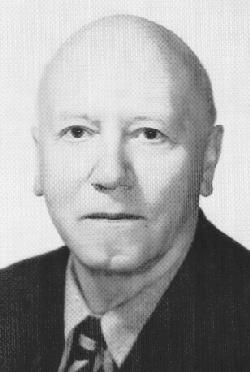
About C. D. Broad