But why then did the Ancient Priestesses always answer in Verse? ...To this Plutarch replies... That even the Ancient Priestesses did now and then speak in Prose. And besides this, in Old times all People were born Poets. ...[T]hey had no sooner drank a little freely, but they made Verses; they had no sooner cast their eyes on a Handsom Woman, but they were all Poesy, and their very common discourse fell naturally into Feet and Rhime: So that their Feasts and their Courtships were the most delectable things in the World. But now this Poetick Genius has deserted Mankind: and tho' our passions be as ardent... yet Love at present creeps in humble prose. ...Plutarch gives us another reason ...that the Ancients wrote always in Verse, whether they treated of Religion, Morality, Natural Philosophy or Astrology. Orpheus and Hesiod, whom every body acknowledges for Poets, were Philosophers also: and Parmenides, Xenophanes, Empedocles, Eudoxus, and Thales... [the] Philosophers, were Poets too. It is very strange indeed that Poetry should be elder Brother to Prose... but it is very probable... precepts... were shap'd into measured lines, that they might be the more easily remembred: and therefore all their Laws and their rules of Morality were in Verse. By this we may see that Poetry had a much more serious beginning than is usually imagin'd, and that the Muses have of late days mightily deviated from their original Gravity.
What It Means
This is a placeholder explanation generated by the low-overhead model. It interprets "But why then did the Ancient Priestesses always answer in Verse? ...To this Plutarch replies... That even the Ancient Priestesses did now and then speak in Prose. And besides this, in Old times all People were born Poets. ...[T]hey had no sooner drank a little freely, but they made Verses; they had no sooner cast their eyes on a Handsom Woman, but they were all Poesy, and their very common discourse fell naturally into Feet and Rhime: So that their Feasts and their Courtships were the most delectable things in the World. But now this Poetick Genius has deserted Mankind: and tho' our passions be as ardent... yet Love at present creeps in humble prose. ...Plutarch gives us another reason ...that the Ancients wrote always in Verse, whether they treated of Religion, Morality, Natural Philosophy or Astrology. Orpheus and Hesiod, whom every body acknowledges for Poets, were Philosophers also: and Parmenides, Xenophanes, Empedocles, Eudoxus, and Thales... [the] Philosophers, were Poets too. It is very strange indeed that Poetry should be elder Brother to Prose... but it is very probable... precepts... were shap'd into measured lines, that they might be the more easily remembred: and therefore all their Laws and their rules of Morality were in Verse. By this we may see that Poetry had a much more serious beginning than is usually imagin'd, and that the Muses have of late days mightily deviated from their original Gravity." in the context of "" to mean that wisdom is timeless.
Tags
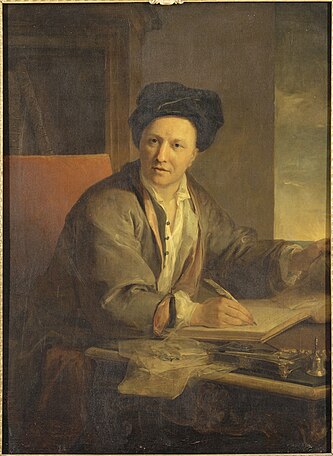
About Bernard Le Bovier de Fontenelle