Leslie Stephen, Studies of a Biographer, Vol. II (1898), p. 143
“
Young men, as a rule, like a leader who has some distinct aim, good or bad, and if Jowett were to be judged by that test one would say that no one of his time was less qualified to be a leader. To a distinct view of the importance of some solution he seems to have joined the profound conviction that no conceivable solution would hold water. "He stood," says one of his pupils, in a rather different sense, "at the parting of many ways," and he wrote, one must add, "No thoroughfare" upon them all.
— Leslie Stephen
What It Means
This is a placeholder explanation generated by the low-overhead model. It interprets "Young men, as a rule, like a leader who has some distinct aim, good or bad, and if Jowett were to be judged by that test one would say that no one of his time was less qualified to be a leader. To a distinct view of the importance of some solution he seems to have joined the profound conviction that no conceivable solution would hold water. "He stood," says one of his pupils, in a rather different sense, "at the parting of many ways," and he wrote, one must add, "No thoroughfare" upon them all." in the context of "Leslie Stephen, Studies of a Biographer, Vol. II (1898), p. 143" to mean that wisdom is timeless.
Source: Wikiquote: "Benjamin Jowett" (Quotes about Jowett)
The 'What it means' explanation text was generated by Google Gemini Flash (accessed January 18, 2026). https://gemini.google.com/app
Tags

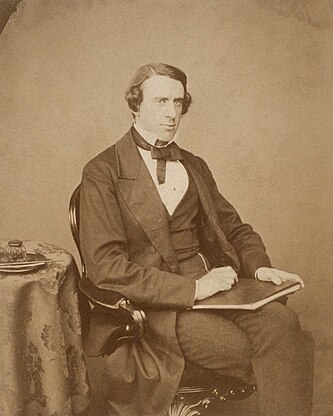
About Benjamin Jowett
Benjamin Jowett (15 April 1817 – 1 October 1893) was a theologian and classical scholar who became one of the great public figures of Victorian England. He was Regius Professor of Greek at Oxford from 1855, Master of Balliol College, Oxford from 1870, and Vice-Chancellor of the university from 1882.
View all quotes →