Link Copied!
Bell hooks Quotes (1952-2021)



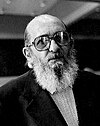




About Bell hooks
bell hooks (born Gloria Jean Watkins; September 25, 1952 – December 15, 2021), was an American university professor specializing in social criticism focused on groups distinguished by established differences in social power.
Best Bell hooks Quotes
Shortest
Earliest
Explore our curated collection of the most famous and impactful Bell hooks quotes.
“People with healthy self-esteem do not need to create pretend identities.”
“Black women control the world. We are through being discriminated against.”

“Creation spirituality replaced a patriarchal spirituality rooted in notions of fall and redemption.”

“To be in touch with senses and emotions beyond conquest is to enter the realm of the mysterious.”

“To counter the fixation on a rhetoric of victimhood, black folks must engage in a discourse of self-determination.”

“There will be no mass-based feminist movement as long as feminist ideas are understood only by a well-educated few.”
“Popular escapist fiction enchants adult readers without challenging them to be educated for critical consciousness.”

“The fear of being alone, or of being unloved, had caused women of all races to passively accept sexism and sexist oppression.”
“Racism has always been a divisive force separating black men and white men, and sexism has been a force that unites the two groups.”

“As we search as a nation for constructive ways to challenge racism and white supremacy, it is absolutely essential that progressive female voices gain a hearing.”
“I have wanted them to have this simple definition to read again and again so they know: Feminism is a movement to end sexism, sexist exploitation, and oppression.”

“The more Lil' Kim distorted her natural beauty to become a cartoonlike caricature of whiteness, the larger her success.”
“Today’s fashion magazines may carry an article about the dangers of anorexia while bombarding its readers with images of emaciated young bodies representing the height of beauty and desirability.”

“The fierce willingness to repudiate domination in a holistic manner is the starting point for progressive cultural revolution.”

“Since we live in a society that promotes faddism and temporary superficial adaptation of different values, we are easily convinced that changes have occurred in arenas where there has been little or no change.”

“What nationalist educators often fail to recognize is that merely being taught by teachers who are black has not and will not solve the problem if the teachers have been socialized to internalize racist thinking.”

“Indeed much of the literature written about black folks in the post-civil rights era emphasized the need for jobs. Material advancement was deemed the pressing agenda. Mental health concerns were not a high priority.”

“The significance of feminist movement (when it is not co-opted by opportunistic, reactionary forces) is that it offers a new ideological meeting ground for the sexes, a space for criticism, struggle, and transformation.”

“Open, honest, truth-telling individuals value privacy. We all need spaces where we can be alone with thoughts and feelings - where we can experience healthy psychological autonomy and can choose to share when we want to.”
“If one assumes, as I do, that battery is caused by the belief permeating this culture that hierarchical rule and coercive authority are natural, then all our relationships tend to be based on power and domination, and thus all forms of battery are linked.”

“While it is in no way racist for any author to write a book exclusively about white women, it is fundamentally racist for books to be published that focus solely on the American white woman's experience in which that experience is assumed to be the American woman's experience.”

“Revolutionary feminism embraces men who are able to change, who are capable of responding mutually in a subject-to-subject encounter where desire and fulfillment are in no way linked to coercive subjugation. This feminist vision of the sexual imaginary is the space few men seem able to enter.”
“A dangerous form of psychological splitting had to have taken place, and it continues to take place, in the psyches of many African Americans who can on one hand oppose racism, and then on the other hand passively absorb ways of thinking about beauty that are rooted in white supremacist thought.”
Bell hooks Quotes by Topic
Find exactly what you are looking for by browsing this categorized list of Bell hooks quotes by topic.
Bell hooks on Feminist theory 4 quotes
“We resist hegemonic dominance of feminist thought by insisting that it is a theory in the making, that we must necessarily criticize, question, re-examine, and explore new possibilities.”

Bell hooks on Feminism 2 quotes
“My thoughts have been shaped by the conviction that feminism must become a mass based political movement if it is to have a revolutionary, transformative impact on society.”

Bell hooks on Intersectionality 2 quotes
“Racism abounds in the writings of white feminists, reinforcing white supremacy and negating the possibility that women will bond politically across ethnic and racial boundaries. Past feminist refusal to draw attention to and attack racial hierarchies suppressed the link between race and class. Yet class structure in American society has been shaped by the racial politic of white supremacy; it is only by analyzing racism and its function in capitalist society that a thorough understanding of class relationships can emerge. Class struggle is inextricably bound to the struggle to end racism.”

Bell hooks on Books
“Life-transforming ideas have always come to me through books.”

Bell hooks on Class conflict
“Class struggle is inextricably bound to the struggle to end racism.”
Bell hooks on Domination
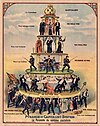
“The fierce willingness to repudiate domination in a holistic manner is the starting point for progressive cultural revolution.”
Bell hooks on Queer
“As the essence of queer, I think of Tim Dean's work on being queer and queer not as being about who you're having sex with—that can be a dimension of it—but queer as being about the self that is at odds with everything around it and it has to invent and create and find a place to speak and to thrive and to live.”

Bell hooks on Sexuality
“Professors rarely speak of the place of eros or the erotic in our classrooms. Trained in the philosophical context of Western metaphysical dualism, many of us have accepted the notion that there is a split between the body and the mind. Believing this, individuals enter the classroom to teach as though only the mind is present, and not the body.”
Bell hooks on Jim Crow laws
“To be in the margin is to be part of the whole but outside the main body. As black Americans living in a small Kentucky town, the railroad tracks were a daily reminder of our marginality. ... We had always to return to the margin, to cross the tracks, to shacks and abandoned houses on the edge of town. There were laws to ensure our return. To not return was to risk being punished.”

Bell hooks on Feminism in the United States
“Feminism in the United States has never emerged from the women who are most victimized by sexist oppression; women who are daily beaten down, mentally, physically, and spiritually-women who are powerless to change their condition in life. They are a silent majority. A mark of their victimization is that they accept their lot in life without visible question, without organized protest, without collective anger or rage.”

Bell hooks on African-American men
“Ironically, the imperialist white-supremacist capitalist state, which claimed the black family would be healthier if black men headed households, had no difficult taking men away from households and sending them far away from families to wage war, to sacrifice their lives for a country that was denying them full citizenship. The Moynihan Report did not create gender warfare in black life; it simply validated the sexist beliefs of many African-American men and to a grave extent legitimized their efforts to subjugate black females.”
Bell hooks on Black feminism
“Racism abounds in the writings of white feminists, reinforcing white supremacy and negating the possibility that women will bond politically across ethnic and racial boundaries. Past feminist refusal to draw attention to and attack racial hierarchies suppressed the link between race and class. Yet class structure in American society has been shaped by the racial politic of white supremacy; it is only by analyzing racism and its function in capitalist society that a thorough understanding of class relationships can emerge. Class struggle is inextricably bound to the struggle to end racism.”

Bell hooks on Sexism
“A central tenet of modern feminist thought has been the assertion that "all women are oppressed." This assertion implies that women share a common lot, that factors like class, race, religion, sexual preference, etc. do not create a diversity of experience that determines the extent to which sexism will be an oppressive force in the lives of individual women. Sexism as a system of domination is institutionalized but it has never determined in an absolute way the fate of all women in this society. Being oppressed means the absence of choices. It is the primary point of contact between the oppressed and the oppressor. Many women in this society do have choices, (as inadequate as they are) therefore exploitation and discrimination are words that more accurately describe the lot of women collectively in the United States. Many women do not join organized resistance against sexism precisely because sexism has not meant an absolute lack of choices. They may know they are discriminated against on the basis of sex, but they do not equate this with oppression. Under capitalism, patriarchy is structured so that sexism restricts women's behavior in some realms even as freedom from limitations is allowed in other spheres. The absence of extreme restrictions leads many women to ignore the areas in which they are exploited or discriminated against; it may even lead them to imagine that no women are oppressed. There are oppressed women in the United States, and it is both appropriate and necessary that we speak against such oppression.”
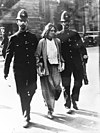
Bell hooks on Residential segregation in the United States
“To be in the margin is to be part of the whole but outside the main body. As black Americans living in a small Kentucky town, the railroad tracks were a daily reminder of our marginality. Across those tracks were paved streets, stores we could not enter, restaurants we could not eat in, and people we could not look directly in the face. Across those tracks was a world we could work in as maids, as janitors, as prostitutes, as long as it was in a service capacity. We could enter that world but we could not live there. We had always to return to the margin, to cross the tracks, to shacks and abandoned houses on the edge of town. There were laws to ensure our return. To not return was to risk being punished. Living as we did-on the edge-we developed a particular way of seeing reality. We looked both from the outside in and and from the inside out. We focused our attention on the center as well as on the margin. We understood both. This mode of seeing reminded us of the existence of a whole universe, a main body made up of both margin and center. Our survival depended on an ongoing public awareness of the separation between margin and center and an ongoing private acknowledgment that we were a necessary, vital part of that whole. This sense of wholeness, impressed upon our consciousness by the structure of our daily lives, provided us an oppositional world view-a mode of seeing unknown to most of our oppressors, that sustained us, aided us in our struggle to transcend poverty and despair, strengthened our sense of self and our solidarity.”

Bell hooks on Social exclusion
“To be in the margin is to be part of the whole but outside the main body. As black Americans living in a small Kentucky town, the railroad tracks were a daily reminder of our marginality. Across those tracks were paved streets, stores we could not enter, restaurants we could not eat in, and people we could not look directly in the face. Across those tracks was a world we could work in as maids, as janitors, as prostitutes, as long as it was in a service capacity. We could enter that world but we could not live there. We had always to return to the margin, to cross the tracks, to shacks and abandoned houses on the edge of town. There were laws to ensure our return. To not return was to risk being punished. Living as we did-on the edge-we developed a particular way of seeing reality. We looked both from the outside in and and from the inside out. We focused our attention on the center as well as on the margin. We understood both. This mode of seeing reminded us of the existence of a whole universe, a main body made up of both margin and center. Our survival depended on an ongoing public awareness of the separation between margin and center and an ongoing private acknowledgment that we were a necessary, vital part of that whole. This sense of wholeness, impressed upon our consciousness by the structure of our daily lives, provided us an oppositional world view-a mode of seeing unknown to most of our oppressors, that sustained us, aided us in our struggle to transcend poverty and despair, strengthened our sense of self and our solidarity.”

What Bell hooks Said About Others
Discover personal opinions Bell hooks shared regarding contemporaries.
Bell hooks on Betty Friedan 2 quotes
“Friedan was a principal shaper of contemporary feminist thought. Significantly, the one-dimensional perspective on women's reality presented in her book became a marked feature of the contemporary feminist movement.”

Bell hooks on Adrienne Rich 2 quotes
“Despite flaws and contradictions in her analysis, Adrienne Rich's essay "Disloyal to Civilization': Feminism, Racism, and Gynephobia" was groundbreaking in that it ruptured that wall of denial, addressing the issue of race and accountability. White women were more willing to "hear" another white woman talk about racism, yet it is their inability to listen to black women that impedes feminist progress.”

Bell hooks on Audre Lorde
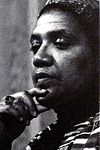
“Audre Lorde's essay "Eye to Eye" was one of the very first readings on the list. It was the work everyone called to mind in our class as we spoke about how important it is for black women to stand in feminist solidarity with one another.”
Bell hooks on Malcolm X
“Marcus Garvey, Elijah Muhammad, Malcolm X, Martin Luther King, Stokely Carmichael, Amiri Baraka and other black male leaders have righteously supported patriarchy. They have all argued that it is absolutely necessary for black men to relegate black women to a subordinate position both in the political sphere and in home life.”

Bell hooks on Stokely Carmichael
“Marcus Garvey, Elijah Muhammad, Malcolm X, Martin Luther King, Stokely Carmichael, Amiri Baraka and other black male leaders have righteously supported patriarchy. They have all argued that it is absolutely necessary for black men to relegate black women to a subordinate position both in the political sphere and in home life.”

Bell hooks on Marcus Garvey
“Marcus Garvey, Elijah Muhammad, Malcolm X, Martin Luther King, Stokely Carmichael, Amiri Baraka and other black male leaders have righteously supported patriarchy. They have all argued that it is absolutely necessary for black men to relegate black women to a subordinate position both in the political sphere and in home life.”

Bell hooks on Elijah Muhammad
“Marcus Garvey, Elijah Muhammad, Malcolm X, Martin Luther King, Stokely Carmichael, Amiri Baraka and other black male leaders have righteously supported patriarchy. They have all argued that it is absolutely necessary for black men to relegate black women to a subordinate position both in the political sphere and in home life.”

Bell hooks on Amiri Baraka
“Marcus Garvey, Elijah Muhammad, Malcolm X, Martin Luther King, Stokely Carmichael, Amiri Baraka and other black male leaders have righteously supported patriarchy. They have all argued that it is absolutely necessary for black men to relegate black women to a subordinate position both in the political sphere and in home life.”
Bell hooks on Angela Davis
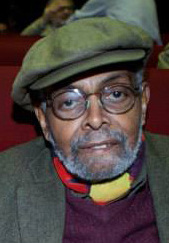
“When contemporary feminist movement first began, feminist writings and scholarship by black women was groundbreaking. The writings of black women like Cellestine Ware, Toni Cade Bambara, Michele Wallace, Barbara Smith, and Angela Davis, to name a few, were all works that sought to articulate, define, speak to and against the glaring omissions in feminist work, the erasure of black female presence.”

Bell hooks on Barbara Smith
“When contemporary feminist movement first began, feminist writings and scholarship by black women was groundbreaking. The writings of black women like Cellestine Ware, Toni Cade Bambara, Michele Wallace, Barbara Smith, and Angela Davis, to name a few, were all works that sought to articulate, define, speak to and against the glaring omissions in feminist work, the erasure of black female presence.”

Bell hooks on Toni Cade Bambara
“When contemporary feminist movement first began, feminist writings and scholarship by black women was groundbreaking. The writings of black women like Cellestine Ware, Toni Cade Bambara, Michele Wallace, Barbara Smith, and Angela Davis, to name a few, were all works that sought to articulate, define, speak to and against the glaring omissions in feminist work, the erasure of black female presence.”

Bell hooks on Violence against women
“Feminism in the United States has never emerged from the women who are most victimized by sexist oppression; women who are daily beaten down, mentally, physically, and spiritually-women who are powerless to change their condition in life. They are a silent majority. A mark of their victimization is that they accept their lot in life without visible question, without organized protest, without collective anger or rage.”

Quotes About Bell hooks
Gain deeper perspective through quotes about Bell hooks from others.
Chapter on Bell hooks
“Males learn to lie as a way of obtaining power, and females not only do the same but they also lie to pretend powerlessness.”
Marilyn Chin on Bell hooks
“I learned a lot from the black arts movement. I loved reading black feminist thinkers on my own (outside of academia)—Audre Lorde, Barbara Smith, Angela Davis, June Jordan, bell hooks, etc.”

Angela Davis on Bell hooks
“My own book Women, Race and Class was one of many that were published during that era, including, to name only a few, This Bridge Called My Back, edited by Gloria Anzaldúa and Cherrie Moraga, the work of bell hooks and Michelle Wallace, and the anthology All the Women Are White, All the Blacks Are Men, but Some of Us Are Brave: Black Women's Studies. So behind this concept of intersectionality is a rich history of struggle. A history of conversations among activists within movement formations, and with and among academics as well.”
Melanie Kaye/Kantrowitz "Jews on Bell hooks
“We need to recognize the destructive role played by the media in fanning the flames of the "Black-Jewish Conflict." Cornel West, bell hooks, Richard Green, Barbara Christian, Henry Louis Gates, Marian Wright Edelman, Nell Painter, Albert Raby....Why are these names not as well known outside the African American community as the names of Louis Farrakhan or Leonard Jeffries? Are they, in their diversity and dynamism, less representative of the African American community?”
Robin Kelley on Bell hooks 2 quotes
“Radical black feminists have never confined their vision to just the emancipation of black women or women in general, or all black people for that matter. Rather, they are the theorists and proponents of a radical humanism committed to liberating humanity and reconstructing social relations across the board. When bell hooks says "Feminism is for everybody," she is echoing what has always been a basic assumption of black feminists. We are not talking about identity politics but a constantly developing often contested, revolutionary conversation about how all of us might envision and remake the world.”
Beverly Guy-Sheftall on Bell hooks
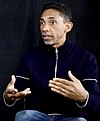
“the choice of bell hooks, her great-grandmother, which she put in lowercase letters, said to us that it is not me, Gloria Watkins, who is the most important; it’s what these words are and the model of my great-grandmother Bell Hooks, who stays in my consciousness. And the small letters also captured, I think, bell hooks’s always transgressive oppositional self. So, I’m not going to even use capital letters. I’m not going to use my name. I’m going to use my transgressive great-grandmother’s name on those books...fundamentally, she was a teacher. And by “teacher,” I meant she believed that her audience was broader than the academy or broader than higher education, and she wanted to reach the largest number of people, regular people, young boys, children, that she could. And she wanted to have the broadest impact on the broadest amount of people. And so, when I think of bell hooks, I think about her primarily as a teacher...And she was very much impacted by teachers. She was very much impacted, for example, by the Buddhist person Thich Nhat Hanh. And I think that she saw herself in some ways as a person who would sit with — sit with — young people and community people and students and help them understand this world in which we live, which is full of all kinds of domination. So I see her as a teacher...She was hard-hitting. She was sometimes merciless in her critiques. She was unrelenting. She was courageous. She was in your face. But she was also gentle. And I was just listening to that sort of soft voice, gentle spirit, passionate and always, always trying to tell the truth, from her perspective...She wanted little Black boys to love themselves. She wanted little Black girls with so-called nappy hair to love themselves, which is why she wrote that book about — of being nappy. So we might think about love as a sort of innocuous, trivial, nonpolitical project, but she knew that loving ourselves, all people, but particularly people of color and Black people in the U.S., to love ourselves is a radical political act. And that’s one of the people’s favorite books, All About Love, because I think we understood that, that if you don’t love yourself, if you don’t engage in self-love, you cannot possibly change the world. And so, that was an extremely important intervention in terms of her writings...Her constant naming of imperial white supremacist patriarchy, which can also be framed if we borrow Kimberlé Crenshaw’s term “intersectionality” — bell didn’t use the term “intersectionality.” She wanted us to hear “imperial white supremacist patriarchy” — and later she added “heteropatriarchy” — because she wanted to name what that was. But it is essentially the concept of intersectionality, which goes back to the 19th century Black women, such as Maria Stewart and Ida B. Wells. And so she never stopped saying it, “imperial white supremacist heteropatriarchy,” because she wanted us to hear it over and over and over again so that we could eradicate it...she always insisted, lived the life that she wanted to live, lived it on her own terms.”
Elizabeth Martinez on Bell hooks
“Plagued by Western habits of either-or, dualistic thinking, we all may fail to understand that race, class and gender interconnect to sustain a corporate ruling class. In the language of African-American essayist bell hooks, they are interlocking systems of oppression. Neither Latina nor Anglo women should yield to the temptation of making a hierarchy of oppressions where battles are fought over whether racism is "worse" than sexism, or class oppression is "deeper" than racism, etc. Instead of hierarchies we need bridges which, after all, exist to make two ends meet.”

Ellen Willis on Bell hooks
“Hooks is a contentious writer, and I don't always agree with her contentions, but Ain't I a Woman has an intellectual vitality and daring that should set new standards for the discussion of race and sex.”

About Bell hooks
bell hooks (born Gloria Jean Watkins; September 25, 1952 – December 15, 2021), was an American university professor specializing in social criticism focused on groups distinguished by established differences in social power.