On the following day, when a great part of the morning was spent, the royal attendants suspected some ill and, after a great uproar, broke in the doors. There they found the death of Attila accomplished by an effusion of blood, without any wound, and the girl with downcast face weeping beneath her veil. Then, as is the custom of that race, they plucked out the hair of their heads and made their faces hideous with deep wounds, that the renowned warrior might be mourned, not by effeminate wailings and tears, but by the blood of men. Moreover a wondrous thing took place in connection with Attila's death. For in a dream some god stood at the side of Marcian, Emperor of the East, while he was disquieted about his fierce foe, and showed him the bow of Attila broken in that same night, as if to intimate that the race of Huns owed much to that weapon. This account the historian Priscus says he accepts upon truthful evidence. For so terrible was Attila thought to be to great empires that the gods announced his death to rulers as a special boon. His body was placed in the midst of a plain and lay in state in a silken tent as a sight for men's admiration. The best horsemen of the entire tribe of the Huns rode around in circles, after the manner of circus games, in the place to which he had been brought and told of his deeds in a funeral dirge in the following manner: "The chief of the Huns, King Attila, born of his sire Mundiuch, lord of bravest tribes, sole possessor of the Scythian and German realms—powers unknown before—captured cities and terrified both empires of the Roman world and, appeased by their prayers, took annual tribute to save the rest from plunder. And when he had accomplished all this by the favor of fortune, he fell, not by wound of the foe, nor by treachery of friends, but in the midst of his nation at peace, happy in his joy and without sense of pain. Who can rate this as death, when none believes it calls for vengeance?" When they had mourned him with such lamentations, a strava, as they call it, was celebrated over his tomb with great revelling. They gave way in turn to the extremes of feeling and displayed funereal grief alternating with joy. Then in the secrecy of night they buried his body in the earth. They bound his coffins, the first with gold, the second with silver and the third with the strength of iron, showing by such means that these three things suited the mightiest of kings; iron because he subdued the nations, gold and silver because he received the honors of both empires. They also added the arms of foemen won in the fight, trappings of rare worth, sparkling with various gems, and ornaments of all sorts whereby princely state is maintained. And that so great riches might be kept from human curiosity, they slew those appointed to the work—a dreadful pay for their labor; and thus sudden death was the lot of those who buried him as well as of him who was buried.
What It Means
This is a placeholder explanation generated by the low-overhead model. It interprets "On the following day, when a great part of the morning was spent, the royal attendants suspected some ill and, after a great uproar, broke in the doors. There they found the death of Attila accomplished by an effusion of blood, without any wound, and the girl with downcast face weeping beneath her veil. Then, as is the custom of that race, they plucked out the hair of their heads and made their faces hideous with deep wounds, that the renowned warrior might be mourned, not by effeminate wailings and tears, but by the blood of men. Moreover a wondrous thing took place in connection with Attila's death. For in a dream some god stood at the side of Marcian, Emperor of the East, while he was disquieted about his fierce foe, and showed him the bow of Attila broken in that same night, as if to intimate that the race of Huns owed much to that weapon. This account the historian Priscus says he accepts upon truthful evidence. For so terrible was Attila thought to be to great empires that the gods announced his death to rulers as a special boon. His body was placed in the midst of a plain and lay in state in a silken tent as a sight for men's admiration. The best horsemen of the entire tribe of the Huns rode around in circles, after the manner of circus games, in the place to which he had been brought and told of his deeds in a funeral dirge in the following manner: "The chief of the Huns, King Attila, born of his sire Mundiuch, lord of bravest tribes, sole possessor of the Scythian and German realms—powers unknown before—captured cities and terrified both empires of the Roman world and, appeased by their prayers, took annual tribute to save the rest from plunder. And when he had accomplished all this by the favor of fortune, he fell, not by wound of the foe, nor by treachery of friends, but in the midst of his nation at peace, happy in his joy and without sense of pain. Who can rate this as death, when none believes it calls for vengeance?" When they had mourned him with such lamentations, a strava, as they call it, was celebrated over his tomb with great revelling. They gave way in turn to the extremes of feeling and displayed funereal grief alternating with joy. Then in the secrecy of night they buried his body in the earth. They bound his coffins, the first with gold, the second with silver and the third with the strength of iron, showing by such means that these three things suited the mightiest of kings; iron because he subdued the nations, gold and silver because he received the honors of both empires. They also added the arms of foemen won in the fight, trappings of rare worth, sparkling with various gems, and ornaments of all sorts whereby princely state is maintained. And that so great riches might be kept from human curiosity, they slew those appointed to the work—a dreadful pay for their labor; and thus sudden death was the lot of those who buried him as well as of him who was buried." in the context of "Jordanes, The Origin and Deeds of the Goths, translated by Charles C. Mierow" to mean that wisdom is timeless.
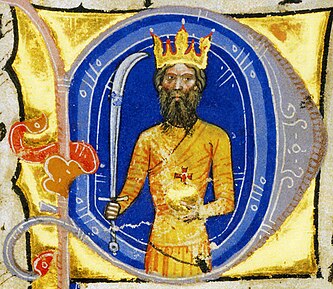
About Attila