Link Copied!
Atal Bihari Vajpayee Quotes (1924-2018)
Politician


About Atal Bihari Vajpayee
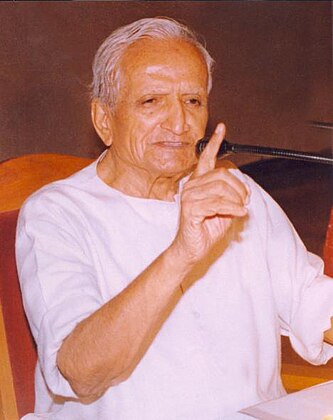
Atal Bihari Vajpayee (December 25, 1924 - August 16, 2018) was an Indian politician who thrice served as the Prime Minister of India, first for a term of 13 days in 1996, for a period of eleven months from 1998 to 1999, and then for a full term from 1999 to 2004.
Best Atal Bihari Vajpayee Quotes
Shortest
Earliest
Explore our curated collection of the most famous and impactful Atal Bihari Vajpayee quotes.
“Politics is a game of compromise.”


“Secularists like you don’t have to spend sleepless nights over this. I will carry the secular baggage on my broad shoulders.”
“Our aim may be as high as the endless sky, but we should have a resolve in our minds to walk ahead, hand-in-hand for victory will be ours.”
“Hindu tan man, Hindu Jeevan, Rag rag Hindu mera parichay.'' English translation: Hindu body and soul, Hindu life, in every pore my identity is of a Hindu”


“I would like this house to join me in paying fulsome tribute to our scientists, engineers and defence personnel whose singular achievements have given us a renewed sense of national pride and self confidence.”

“With the banner of Nationalism in our hearts to build up a Mighty India, let us march forward on the path of Duty. This is no time for rest; this is no occasion for faltering. Let us go onwards and onwards, till we reach the Goal.”

“In our search for a lasting solution to the Kashmir problem, both in its external and internal dimensions, we shall not traverse solely on the beaten track of the past. Mindsets will have to be altered and historical baggage jettisoned.”
“Kinchit nahin bhaybhit main, Kartavya path par jo bhi mile, Yeh bhi sahi woh bhi sahi
English translation:I am not afraid of defeat and victory, whatever comes my way of duty, I will accept it, because this is true and that is true.”
English translation:I am not afraid of defeat and victory, whatever comes my way of duty, I will accept it, because this is true and that is true.”
“This terrible tragedy has created the opportunity to fashion a determined global response to terrorism in all its forms and manifestations, wherever it exists and under whatever name. I assured President Bush of India's complete support in this.”
“I have a vision of India: an India free of hunger and fear, an India free of illiteracy and want. I dream of an India that is prosperous, strong and caring. An India, that regains a place of honour in the comity of great nations.”

“My poetry is a declaration of war, not an exordium to defeat. It is not the defeated soldier's drumbeat of despair, but the fighting warrior's will to win. It is not the de-spirited voice of dejection but the stirring shout of victory.”
“Our National life is full of diversities. We have here a variety of languages, of faiths, of communities, of modes of living, and schools and styles of literature and art. This diversity reflects the abundance of our national life, and need to be preserved and promoted.”

“Russia and India both have a geopolitical interest in a peaceful and stable Asia, which would be relieved of outward pressure and would not harbour and suffer from extremists.... Russia and India must do their best so that international community's efforts in Afghanistan were not futile.”

“We, the Indians, as Guru of the Nations: yes, I believe in that. We can be—or once more become— the hope of mankind. But that requires efforts and courage to be ourselves culturally. Unfortunately, we live in an age of political dwarfs, political managers without vision or courage. But their time is running out.”

“All democracies, especially in developing countries that have considerable diversities and carry the burden of developmental imbalances, have had to grapple with one paramount challenge and that is : how to harmonies’ the legitimate self – assertion of communities that suffered deprivation and dis-empowerment in the past with imperatives of good governance.”
“We are committed to bridge the gap between the city and the village.
We are committed to bridge the gap between capital and the labour.
We are committed to bridge the gap between the citizen and the administration.
We are committed to bridge the gap between the centre and the states.
We are committed to bridge the gap between Linguistic, religious and caste groups.”
We are committed to bridge the gap between capital and the labour.
We are committed to bridge the gap between the citizen and the administration.
We are committed to bridge the gap between the centre and the states.
We are committed to bridge the gap between Linguistic, religious and caste groups.”

“The enemy is within our very hearts and minds. It is the cancer of doubts and despair which is overtaking our people. It is the loss of faith in our system, in the very future of our beloved motherland. This creeping rot must end. I am sure that very soon, by the grace of god and the inherent good sense of the Indian people, it will end. But that calls for a great national effort.”
“We are nations forged from many traditions and faiths, proving year after year that diversity is our strength. From vastly different origins and experiences, we have come to the same conclusions: that freedom and democracy are the strongest bases for both peace and prosperity, and that they are universal aspirations, constrained neither by culture nor levels of economic development.”
“The question is not of ‘right’ and ‘left’; the issue really is Democracy versus Totalitarianism. The choice is not between ‘progressivism’ and ‘reaction’; the people have to choose between forces uncompromisingly pledged in their loyalty to the nation with extra-territorial loyalties. Differences are bound to remain in the country, but the Indian nation cannot afford to be divided in its basic commitment to Nationalism and Democracy.”

“A Sense of oneness, a sense of indianess requires to be created among our youth to halt the mad rush towards an imported five star video culture. We believe that through dedication and perseverance we will realize national unity and create a new India of our dreams. In Delhi, I gave you a slogan: ”Unite and win, today we are achieving unity, tomorrow we will achieve victory", Vandematram.”

“They who interpret secularism as dharma-nirpekshata fail to understand either dharma or secularism. A secular state does not mean an anti-religious state, nor even an irreligious state. For, in that sense, the people of India just never can become secular. A secular state simply means a state which does not identify itself with any specific mode of worship and holds the balance even between all sects- secularism thus mean sampradayanirpekshata and not dharma-nirpekshata.”

“Under the agreement of 1951, Tibet is to have autonomy in its internal affairs. But China has violated the agreement. It has interfered in the internal affairs of Tibet. Lakhs of people from China are being settled in Tibet so that the Tibetans shall be reduced to a minority in their own land... Thousands have been taken from Tibet for inculcating a new religion in them... When we recognized the suzerainty of China over Tibet, we made a great mistake. That was an unfortunate day... China has violated the agreement that it signed with India... When people cannot protect and practise even their religion under communism, how can one say that communism and democracy are compatible?... Tibet is not the internal affair of China... The Government of India should think again about the policy it has been pursuing... If we can champion the cause of Algeria’s independence, why can we not speak out for the independence of Tibet? On the same criteria, is Algeria not the internal affair of France?... Our party supports the independence of Tibet... Can Tibet conceivably attain autonomy within China? Communism and autonomy are antonyms... When we were championing the cause of China in the UN, we could as well have championed that of Tibet. Ukraine is a part of the Soviet Union but it has its own membership of the UN... With howsoever much restraint our prime minister may pursue our policy, if that policy does not help solve the problem of Tibet, then we will have to acknowledge that there is need to inject some firmness into that policy, some activism... A large country has swallowed a small one... As far as India is concerned, China has a malevolent eye towards us... How come, the new Government of China has thrown Chiang Kai-shek out but kept his maps?... This is hidden aggression against India. In Uttar Pradesh, China is squatting over two places that it has wrested. Such incidents point to a gathering calamity... The Tibetan refugees now in India should be allowed to campaign for the freedom of their country just as our freedom fighters campaigned in foreign lands for India’s freedom... This is a new imperialism. Its danger is that it comes wearing the disguise of revolution. It comes shouting the slogans of a new era. But this is imperialism, it is expansionism...”
Atal Bihari Vajpayee Quotes by Topic
Find exactly what you are looking for by browsing this categorized list of Atal Bihari Vajpayee quotes by topic.
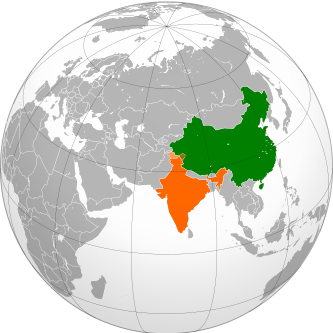
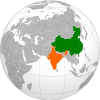
Atal Bihari Vajpayee on China–India relations
“Under the agreement of 1951, Tibet is to have autonomy in its internal affairs. But China has violated the agreement. It has interfered in the internal affairs of Tibet. Lakhs of people from China are being settled in Tibet so that the Tibetans shall be reduced to a minority in their own land... Thousands have been taken from Tibet for inculcating a new religion in them... When we recognized the suzerainty of China over Tibet, we made a great mistake. That was an unfortunate day... China has violated the agreement that it signed with India... When people cannot protect and practise even their religion under communism, how can one say that communism and democracy are compatible?... Tibet is not the internal affair of China... The Government of India should think again about the policy it has been pursuing... If we can champion the cause of Algeria’s independence, why can we not speak out for the independence of Tibet? On the same criteria, is Algeria not the internal affair of France?... Our party supports the independence of Tibet... Can Tibet conceivably attain autonomy within China? Communism and autonomy are antonyms... When we were championing the cause of China in the UN, we could as well have championed that of Tibet. Ukraine is a part of the Soviet Union but it has its own membership of the UN... With howsoever much restraint our prime minister may pursue our policy, if that policy does not help solve the problem of Tibet, then we will have to acknowledge that there is need to inject some firmness into that policy, some activism... A large country has swallowed a small one... As far as India is concerned, China has a malevolent eye towards us... How come, the new Government of China has thrown Chiang Kai-shek out but kept his maps?... This is hidden aggression against India. In Uttar Pradesh, China is squatting over two places that it has wrested. Such incidents point to a gathering calamity... The Tibetan refugees now in India should be allowed to campaign for the freedom of their country just as our freedom fighters campaigned in foreign lands for India’s freedom... This is a new imperialism. Its danger is that it comes wearing the disguise of revolution. It comes shouting the slogans of a new era. But this is imperialism, it is expansionism...”
What Atal Bihari Vajpayee Said About Others
Discover personal opinions Atal Bihari Vajpayee shared regarding contemporaries.
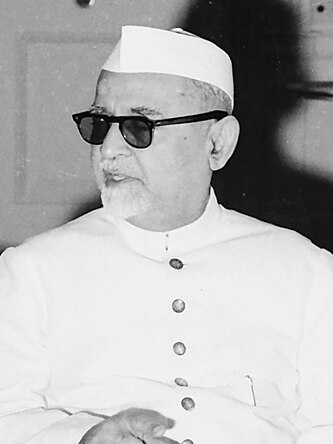
Atal Bihari Vajpayee on Zakir Hussain (politician)
“It is extremely gratifying that you remained steadfast on the course charted by the Father of the Nation when the fury of tempest of chauvinism had either uprooted or shaken many a stalwart. We have established a secular polity in our country in which no distinction based on religion will have a place. By your words and actions you have fortified this secular ideal. Now in the form of Vice President and also as an incumbent of our Democratic Republic we will get your guidance.”
Atal Bihari Vajpayee on H. D. Deve Gowda
“Marx and market does not mix. By the time this realization dawns, the United FrontGovernment (UF) [headed by Deve Gowda] would have gone...the new finance minister, who was an architect of “pro-rich policy” of the erstwhile congress government, had been entrusted with the task of implementing the so-called common programme of the UF. The people are not amused by the spectacle of a Prime Minister pledging his commitment to the previous government’s policies even as he remains a hostage to the support of dogmatic communists for his survival.”
Atal Bihari Vajpayee on Dattopant Thengadi
“I have had long association with Thengadiji. I was present in the Bhopal meeting in which the decision to form the BMS was taken. During the discussion to decide the name of the new organisation, Thengadiji had suggested the name Shramjivi Sangathan. The name Bharatiya Mazdoor Sangh was coined keeping in view the fact that the name should be simple and meaningful. I feel trade unionism is facing a crisis today. We have before us two paths, one of these is on the way out. There is a need to find out the third one. Workers' interests should be protected but at the same time the nation's interest too must be borne in mind. The workers' movement is in a crisis and how to balance things in a changing scenario should be considered using the third way out, which was what Thengadi had been attempting. Whatever Thengadiji has written should be read by all of us. I feel it will guide us for long.”
Quotes About Atal Bihari Vajpayee
Gain deeper perspective through quotes about Atal Bihari Vajpayee from others.
Vivek Agnihotri on Atal Bihari Vajpayee
“Their strategy was simple. Moral domination. Nehru was a thinker. But Rajiv, Sonia, and Rahul are no intellectuals. They took a different route. They redefined morality. Secularism included. Anti-Congress was new immoral. Pro-Hindu became anti-Muslim. India was morally polarized. Morality is subjective. No one can say with guarantee what is pure morality. Masses were forced to choose between moral standards (Secularism, unity in diversity, inclusive etc.) and quality of life (development). People who wanted quality of life were made to feel guilty. Hindus who wanted to celebrate their religious freedom were made to feel guilty. Muslims who wanted to be part of mainstream India were made to feel guilty. They filled India’s psyche with fear, hate and guilt. They hated all indigenous, grassroots thinkers. They hated Sardar Patel, Lal Bahadur Shastri, Morarji Desai, Charan Singh, Chandrashekhar, P.V. Narsimha Rao, Atal Bihari Vajpayee, and now Modi. They are the land grabbers of Sainik Farms and Adarsh Societies of India. They run NGOs. They run media. They coin useless and irrelevant jargon to confuse the masses. They have designations but no real jobs. They are irrelevant NRIs who want us to see a reality which doesn’t exist. They want a plebiscite in Kashmir. They defend stone-pelters. They want Maoists to participate in mainstream politics. They want Tejpal to be freed. Yaqub to be pardoned. But they want Modi to be hanged. They are the hijackers of national morality. Secularism included. They are the robbers of Indian treasury. They are the brokers of power. They are the pimps of secularism. They are the Intellectual Mafia.”

Baru on Atal Bihari Vajpayee
“The Indian and Western elite did not regard any of Nehru’s successors as ‘thinking’ leaders. Indira Gandhi tried hard to win over India’s intellectual elite, but the Emergency broke a nascent link. When men like P.N. Haksar and P.N. Dhar were hounded out of her inner circle, India’s intellectuals deserted her. Rajiv Gandhi was never taken seriously by this elite. Narasimha Rao may have been a scholar in his own right, but he was an ‘outsider’ to India’s metropolitan elite. In Andhra Pradesh, among the Telugu-speaking elite he was known as an ashtavadhani, a literary master. But Delhi’s elite tended to conflate his intellectual achievements with the fact that he was fluent in many languages. Vajpayee too was a highly regarded poet. Indeed, Rao and Vajpayee enjoyed the company of intellectuals and could count many professors among their friends. But in the snobbish world of the metropolitan elite, an Oxbridge type like Dr Singh was regarded as a class apart from these home-grown politician-intellectuals.”
Prof. Paul Brass on Atal Bihari Vajpayee
““I think Vajpayee is a dyed-in-the-wool RSS man.””
Elst on Atal Bihari Vajpayee
“No matter how many concessions A.B. Vajpayee offered during his 13-day tenure as Prime Minister in search of a majority, no matter how hard he kicked his Kashmiri refugee supporters in the groin by promising to preserve Art. 370, no matter how sincerely he condemned the Ayodhya demolition, he did not get a single undertaking from a non-"communal" parliamentarian to support the government during the confidence vote. No matter how deep the BJP leaders crawl in the dust begging for certificates of good secular conduct from their enemies, this has never yielded them anything except contempt. But so far, everything indicates that they can be counted upon to continue in the same direction.”
Kishwar on Atal Bihari Vajpayee
“Today, to put down Modi, Congressmen don’t tire of praising Atal Bihari Vajpayee as a moderate consensus builder. But while Vajpayee was prime minister he was targeted with as much ruthlessness as Modi—only that it cut less ice with the media or the people at large because Vajpayee was a well known national figure. By contrast, Modi was a relatively obscure regional leader for most Indians, as well as for most media professionals.”
Pandit Jawaharlal Nehru introducing Vajpayee on Atal Bihari Vajpayee
“He is a young leader of opposition. Who is always criticizing me. But I see in him a great future.”
About Atal Bihari Vajpayee
Atal Bihari Vajpayee (December 25, 1924 - August 16, 2018) was an Indian politician who thrice served as the Prime Minister of India, first for a term of 13 days in 1996, for a period of eleven months from 1998 to 1999, and then for a full term from 1999 to 2004.