Some of the church fathers have taught that even marital cohabitation should only be allowed when it occurs merely for the sake of the procreation of children. ... Clemens (Strom, iii. c. 3) attributes this view to the Pythagoreans. This is, however, strictly speaking, incorrect. For if the coitus be no longer desired for its own sake, the negation of the Will-to-Live has already appeared, and the propagation of the human race is then superfluous and senseless, inasmuch as its purpose is already attained. Besides, without any subjective passion, without lust and physical pressure, with sheer deliberation, and the cold blooded purpose to place a human being in the world merely in order that he should be there this would be such a very questionable moral action that few would take it upon themselves; one might even say of it indeed that it stood in the same relation to generation from the mere sexual impulse as a cold-blooded deliberate murder does to a death-stroke given in anger.
What It Means
This is a placeholder explanation generated by the low-overhead model. It interprets "Some of the church fathers have taught that even marital cohabitation should only be allowed when it occurs merely for the sake of the procreation of children. ... Clemens (Strom, iii. c. 3) attributes this view to the Pythagoreans. This is, however, strictly speaking, incorrect. For if the coitus be no longer desired for its own sake, the negation of the Will-to-Live has already appeared, and the propagation of the human race is then superfluous and senseless, inasmuch as its purpose is already attained. Besides, without any subjective passion, without lust and physical pressure, with sheer deliberation, and the cold blooded purpose to place a human being in the world merely in order that he should be there this would be such a very questionable moral action that few would take it upon themselves; one might even say of it indeed that it stood in the same relation to generation from the mere sexual impulse as a cold-blooded deliberate murder does to a death-stroke given in anger." in the context of "Arthur Schopenhauer, Contributions to the Doctrine of the Affirmation and Negation of the Will-to-live (1851)" to mean that wisdom is timeless.
Tags
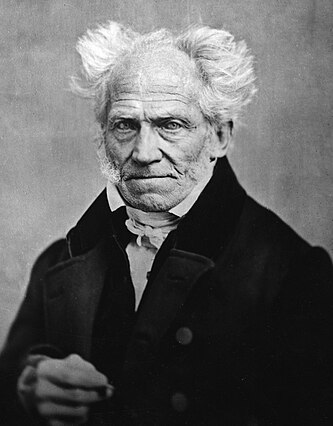
About Arthur Schopenhauer