Arthur Schopenhauer, Counsels and Maxims, trans. T. Bailey Saunders (London: George Allen & Unwin Ltd, 1890), Ch. II, # 9, p. 40
“
Rascals are always sociable—more's the pity! and the chief sign that a man has any nobility in his character is the little pleasure he takes in others' company. He prefers solitude more and more, and, in course of time, comes to see that, with few exceptions, the world offers no choice beyond solitude on one side and vulgarity on the other.
— Arthur Schopenhauer on Solitude
What It Means
This is a placeholder explanation generated by the low-overhead model. It interprets "Rascals are always sociable—more's the pity! and the chief sign that a man has any nobility in his character is the little pleasure he takes in others' company. He prefers solitude more and more, and, in course of time, comes to see that, with few exceptions, the world offers no choice beyond solitude on one side and vulgarity on the other." in the context of "Arthur Schopenhauer, Counsels and Maxims, trans. T. Bailey Saunders (London: George Allen & Unwin Ltd, 1890), Ch. II, # 9, p. 40" to mean that wisdom is timeless.

Source: Wikiquote: "Solitude" (S)
The 'What it means' explanation text was generated by Google Gemini Flash (accessed January 26, 2026). https://gemini.google.com/app
Tags
About Arthur Schopenhauer
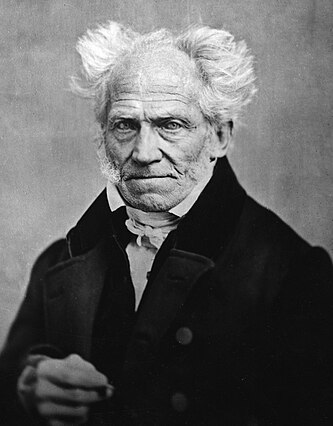
Arthur Schopenhauer (22 February 1788 – 21 September 1860) was a German philosopher, most famous for his work The World as Will and Representation (1819).
About Arthur Schopenhauer
Arthur Schopenhauer (22 February 1788 – 21 September 1860) was a German philosopher, most famous for his work The World as Will and Representation (1819).
View all quotes →