If we picture to ourselves roughly as far as we can the sum total of misery, pain, and suffering of every kind on which the sun shines in its course, we shall admit that it would have been much better if it had been just as impossible for the sun to produce the phenomenon of life on earth as on the moon, and the surface of the earth, like that of the moon, had still been in a crystalline state.
What It Means
This is a placeholder explanation generated by the low-overhead model. It interprets "If we picture to ourselves roughly as far as we can the sum total of misery, pain, and suffering of every kind on which the sun shines in its course, we shall admit that it would have been much better if it had been just as impossible for the sun to produce the phenomenon of life on earth as on the moon, and the surface of the earth, like that of the moon, had still been in a crystalline state." in the context of "Arthur Schopenhauer, trans. E. F. J. Payne, Parerga and Paralipomena: Short Philosophical Essays, Volume II (2001), chapter XII - Additional Remarks on the Doctrine of the Suffering of the World " to mean that wisdom is timeless.

Tags
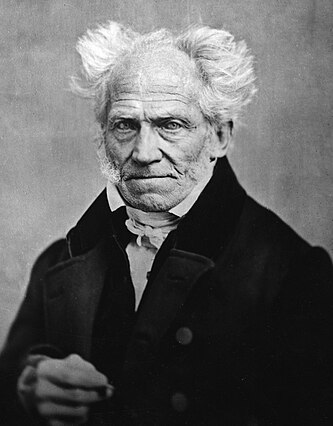
About Arthur Schopenhauer