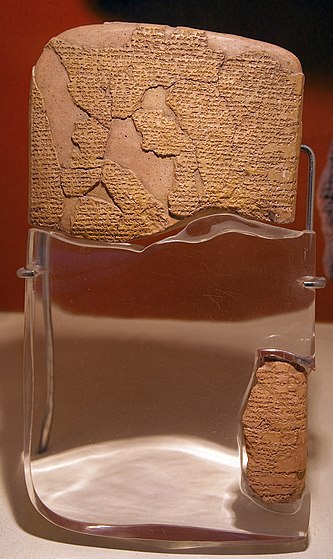
It is the intention of His Majesty's Government to lay on the table of both Houses of Parliament every treaty, when signed, for a period of 21 days, after which the treaty will be ratified and published and circulated in the Treaty Series. In the case of important treaties, the Government will, of course, take an opportunity of submitting them to the House for discussion within this period. But, as the Government cannot take upon itself to decide what may be considered important or unimportant, if there is a formal demand for discussion forwarded through the usual channels from the Opposition or any other party, time will be found for the discussion of the Treaty in question.
What It Means
This is a placeholder explanation generated by the low-overhead model. It interprets "It is the intention of His Majesty's Government to lay on the table of both Houses of Parliament every treaty, when signed, for a period of 21 days, after which the treaty will be ratified and published and circulated in the Treaty Series. In the case of important treaties, the Government will, of course, take an opportunity of submitting them to the House for discussion within this period. But, as the Government cannot take upon itself to decide what may be considered important or unimportant, if there is a formal demand for discussion forwarded through the usual channels from the Opposition or any other party, time will be found for the discussion of the Treaty in question." in the context of "Part of the statement that became known as the Ponsonby Rule (1 April 1924)." to mean that wisdom is timeless.