Ch. 23 “Moondozer”, p. 129
“
There was no substitute for reality; one should be aware of imitations.
— Arthur C. Clarke
What It Means
This is a placeholder explanation generated by the low-overhead model. It interprets "There was no substitute for reality; one should be aware of imitations." in the context of "Ch. 23 “Moondozer”, p. 129" to mean that wisdom is timeless.

Source: Wikiquote: "Arthur C. Clarke" (Quotes, 1970s, The Fountains of Paradise (1979): All page numbers from the mass market paperback edition published by Del Rey (First Ballantine Books edition, February 1980) )
The 'What it means' explanation text was generated by Google Gemini Flash (accessed January 18, 2026). https://gemini.google.com/app
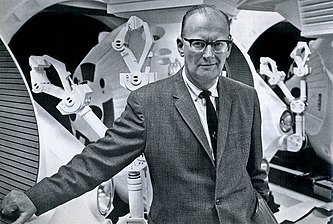
About Arthur C. Clarke
Sir Arthur Charles Clarke (16 December 1917 – 19 March 2008) was a British author, inventor and futurist, famous for his short stories and novels, among them 2001: A Space Odyssey (1968), and as a host and commentator in the British television series Mysterious World. For many years, Robert A. Heinlein, Isaac Asimov, and Clarke were known as the "Big Three" of science fiction.
View all quotes →