Link Copied!
Anna Akhmatova Quotes (1889-1966)
Author, Poet
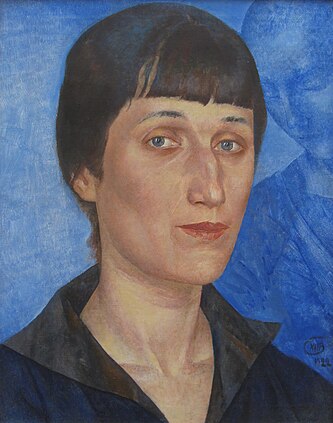
About Anna Akhmatova
Anna Andreevna Gorenko А́нна Андре́евна Горе́нко (23 June {11 June O.S.} 1889 - 5 March 1966) was a Russian poet, known primarily by her pen name Anna Akhmatova А́нна Ахма́това. Her work was condemned and censored by Soviet authorities and she notably chose not to emigrate, but remained in Russia, acting as witness to the difficulties of living and writing in the shadow of Stalinism.
Best Anna Akhmatova Quotes
Shortest
Earliest
Explore our curated collection of the most famous and impactful Anna Akhmatova quotes.
“You lived aloof, maintaining to the end
your magnificent disdain.”
your magnificent disdain.”
“Dread. Bottomless dread...
I am that shadow on the threshold
defending my remnant peace.”
I am that shadow on the threshold
defending my remnant peace.”


“Now everything is clear.
I admit my defeat. The tongue
of my ravings in my ear
is the tongue of a stranger.”
I admit my defeat. The tongue
of my ravings in my ear
is the tongue of a stranger.”
“I know beginnings, I know endings too,
and life-in-death, and something else
I'd rather not recall just now.”
and life-in-death, and something else
I'd rather not recall just now.”
“This woman is sick to her marrow-bone,
this woman is utterly alone,
with husband dead, with son away
in jail. Pray for me. Pray.”
this woman is utterly alone,
with husband dead, with son away
in jail. Pray for me. Pray.”

“A multi-colored crowd streaked about,
and suddenly all was totally changed.
It wasn't the usual city racket.
It came from a strange land.”
and suddenly all was totally changed.
It wasn't the usual city racket.
It came from a strange land.”

“The stars of death stood over us.
And Russia, guiltless, beloved, writhed
under the crunch of bloodstained boots,
under the wheels of Black Marias.”
And Russia, guiltless, beloved, writhed
under the crunch of bloodstained boots,
under the wheels of Black Marias.”
What Anna Akhmatova Said About Others
Discover personal opinions Anna Akhmatova shared regarding contemporaries.
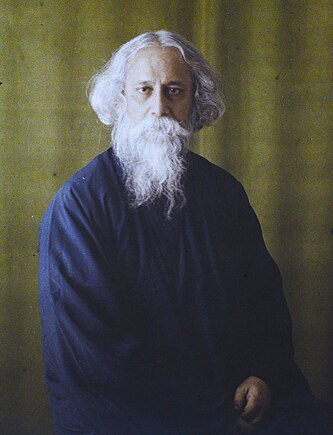
Anna Akhmatova on Rabindranath Tagore
“He is a great poet, I can see that now. It's not only a matter of individual lines which have real genius, or individual poems . . . but that mighty flow of poetry which takes its strength from Hinduism as from the Ganges, and is called Rabindranath Tagore.”
Quotes About Anna Akhmatova
Gain deeper perspective through quotes about Anna Akhmatova from others.
Marjorie Agosín on Anna Akhmatova
“From the works of Primo Levi to the recipes of imagined foods found in the concentration camps of Terezin to the brave poetry of Anna Akhmatova written during the Stalinist era, we are forced to acknowledge the power of poetry to name the unspeakable-to enter and to illuminate the secret corridor of horrors.”

Anita Desai In Interviews with Writers of the Post-Colonial World edited by Feroza Jussawalla on Anna Akhmatova
“I think the first discovery I made for myself which I didn't necessarily share with my family or my friends, but came upon myself, was Russian literature. I've always felt very much enthralled to writers like Dostoevsky, especially, and Chekhov. In later years, modern Russian poets like Pasternak and Mandelstam and Akhmatova have meant a great deal to me. Poetry more than prose.”
Olga P. Hasty on Anna Akhmatova
“The importance of Akhmatova's works in the Russian poetic tradition can scarcely be exaggerated. These works also hold a place of honor in the history of artistic engagement of moral responsibility.”
Judith Hemschemeyer on Anna Akhmatova
“Anna Andreevna Akhmatova used poetry to give voice to the struggles and deepest yearnings of the Russian people, for whom she remains the greatest of literary heroines. She has lately come to symbolize for the world even beyond Russia the power of art to survive and transcend the terrors of our century.”
Nadezhda Mandelstam on Anna Akhmatova
“Akhmatova never ceased to be astonished at the resurrection of poetry once trampled underfoot, wiped out, it had seemed, once and for all. "We never realized that poetry has such a long life," she was always saying, and "poetry isn't what we thought it was when we were young"...I never ceased to believe in M.'s and Akhmatova's poetry. In our depersonalized world where everything human was silenced, only the poet preserved his "self" and a voice which can still be heard even now.”

Osip Mandelstam A LETTER ABOUT RUSSIAN POETRY translated into English on Anna Akhmatova
“Akhmatova introduced all the enormous complexity and wealth of the nineteenth century novel into the Russian lyric. If not for Tolstoi's Anna Karenina, Turgenev's Nest of Gentlefolk (Dvorianskoe gnezdo), all of Dostoevsky and even some [[Leskov, there would be no Akhmatova. Akhmatova's genesis lies entirely in the realm of Russian prose, not in poetry. She developed her poignant and unique poetic form with a backward glance at psychological prose.”
M.L. Raina on Anna Akhmatova
“Akhmatova was neither a woman poet in the narrow militant feminist sense in which the term is understood today, nor just a poet of Russia alone.... Her poetic involvements went beyond the domesticated lyricism of conventional feminine poetry and embraced larger questions of political and social inequity. Though essentially a poet of "the keening muse", as Joseph Brodsky described her, Akhmatova rose above personal sorrows (too numerous to relate here) to create a disciplined yet many-layered work of haunting reverberation. … Akhmatova's is a "poetry of witness" that defends the individual against all forms of coercion. Such poetry does not go into "holes of oblivion" as Hannah Arendt would put it, but nags our guilt of connivance with tyrants like Hitler or Stalin. It invokes religious symbolism to reinforce the language of extremity and to compensate for the fragmentation of social vision caused by the turmoil of the times. … The poetry of witness draws upon what Akhmatova calls "the invisible ink" of others to strengthen its claims to authenticity, not as a substitute for ones tattered memories but as a reminder that others have gone down the same path as oneself.”
Helen Rappaport on Anna Akhmatova
“One of the great Russian poets and a national heroine, Anna Akhmatova (née Gorenko) is not venerated outside Russia as a major poetic voice of the twentieth century. She seemed born to endure the great tragedy in her life and indeed was one of Stalin's most long-suffering literary victims. Her tremendous will to survive, in her self-appointed role as witness of the Great Terror, testifies to huge inner reserves of moral strength that sustained her through years of extreme poverty and isolation, to ultimately become a latter-day nemesis of the dark days of Stalinism. … Her individualism survived the early days of foment in Soviet literature, when literary experimentation was for a short while tolerated, but her work was soon looked upon as insufficiently socialist in its concerns and was suppressed as "bourgeois" after the publication of her collection Anno Domini MCMXXI in 1922. It was the appearance of this work that prompted the eminent Soviet literary critic Boris Eichenbaum to famously deride Akhmatova as "half nun, half harlot" (an epithet later reprised by Andrey Zhdanov in the campaign against Akhmatova in the 1940s).”
Arundhati Roy Things that Can on Anna Akhmatova
“I remembered a poem about queues by Anna Akhmatova-who unlike many of her peers, had survived the Gulag. Well, sort of: "In the terrible years of the Yezhov terror, I spent seventeen months in the prison lines of Leningrad. Once, someone "recognized" me. Then a woman with bluish lips standing behind me, who, of course, had never heard me called by name before, woke up from the stupor to which everybody had succumbed and whispered in my ear (everyone spoke in whispers there): "Can you describe this?" And I answered: "Yes, I can." Then something that looked like a smile passed over what had once been her face." Akhmatova, her first husband Nikolay Gumilyov, Osip Mandelstam, and three other poets were part of Acmeism, a poets' guild. In 1921, Gumilyov was shot by a firing squad for counterrevolutionary activity. Mandelstam was arrested in 1934 for writing an ode to Stalin that showed signs of satire and was not convincing enough in its praise."”
About Anna Akhmatova
Anna Andreevna Gorenko А́нна Андре́евна Горе́нко (23 June {11 June O.S.} 1889 - 5 March 1966) was a Russian poet, known primarily by her pen name Anna Akhmatova А́нна Ахма́това. Her work was condemned and censored by Soviet authorities and she notably chose not to emigrate, but remained in Russia, acting as witness to the difficulties of living and writing in the shadow of Stalinism.