Andrew Lang, in The Story of Joan of Arc (1906), Ch. 18 : The End of the Maid
“
They burned her cruelly to death in the marketplace of Rouen, with eight hundred soldiers round the stake, lest any should attempt to save her. They had put a false accusation on a paper cap, and set it on her head : it was written that she was "Heretic, Relapsed, Apostate, Idolatress." This was her reward for the bravest and best life that was ever lived.
— Andrew Lang on Joan of Arc
What It Means
This is a placeholder explanation generated by the low-overhead model. It interprets "They burned her cruelly to death in the marketplace of Rouen, with eight hundred soldiers round the stake, lest any should attempt to save her. They had put a false accusation on a paper cap, and set it on her head : it was written that she was "Heretic, Relapsed, Apostate, Idolatress." This was her reward for the bravest and best life that was ever lived." in the context of "Andrew Lang, in The Story of Joan of Arc (1906), Ch. 18 : The End of the Maid" to mean that wisdom is timeless.
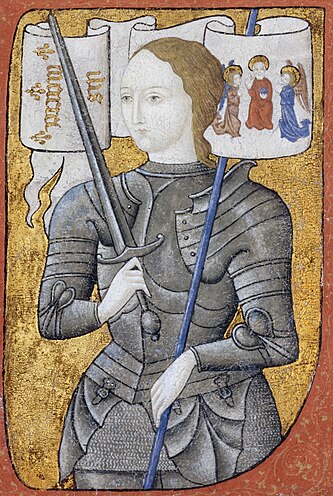
Source: Wikiquote: "Joan of Arc" (Quotes about Joan of Arc: Sorted alphabetically by author or source)
The 'What it means' explanation text was generated by Google Gemini Flash (accessed January 18, 2026). https://gemini.google.com/app
Tags

About Andrew Lang
Andrew Lang (March 31 1844 – July 20 1912) was a Scottish poet, novelist, and literary critic, and contributor to anthropology. He now is best known as the collector of folk and fairy tales, including the works of Brothers Grimm, Charles Perrault and Hans Christian Andersen.
About Andrew Lang
Andrew Lang (March 31 1844 – July 20 1912) was a Scottish poet, novelist, and literary critic, and contributor to anthropology. He now is best known as the collector of folk and fairy tales, including the works of Brothers Grimm, Charles Perrault and Hans Christian Andersen.
View all quotes →