Mahatma Gandhi. May 4, 1921. Gandhi commenting on the appeal to the Amir of Afghanistan to invade British India proposed by some Muslim leaders. Quoted from B.R. Ambedkar, Pakistan or The Partition of India (1946).
“
I would, in a sense, certainly assist the Amir of Afghanistan if he waged war against the British Government. That is to say, I would openly tell my countrymen that it would be a crime to help a government which had lost the confidence of the nation to remain in power.
— Mahatma Gandhi. May
What It Means
This is a placeholder explanation generated by the low-overhead model. It interprets "I would, in a sense, certainly assist the Amir of Afghanistan if he waged war against the British Government. That is to say, I would openly tell my countrymen that it would be a crime to help a government which had lost the confidence of the nation to remain in power." in the context of "Mahatma Gandhi. May 4, 1921. Gandhi commenting on the appeal to the Amir of Afghanistan to invade British India proposed by some Muslim leaders. Quoted from B.R. Ambedkar, Pakistan or The Partition of India (1946)." to mean that wisdom is timeless.
Source: Wikiquote: "Amānullāh Khān" (Quotes about Amānullāh Khān)
The 'What it means' explanation text was generated by Google Gemini Flash (accessed January 18, 2026). https://gemini.google.com/app
Tags
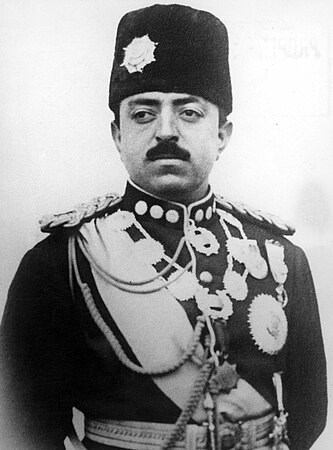
About Amānullāh Khān
Amānullāh Khān (Pashto: امان الله خان) was the sovereign of the Kingdom of Afghanistan from 1919 to 1929, first as Emir and after 1926 as Malik (King). After the third Anglo-Afghan War, Afghanistan was able to pursue an independent foreign policy free from the influence of the United Kingdom. His rule was marked by dramatic political and social change, attempting to modernize Afghanistan on Western designs, which he did not fully succeed in, due to an uprising by Habibullah Kalakani and his followers. On 14 January 1929, Amanullah abdicated and fled to neighbouring British India as the Afghan Civil War began to escalate. From British India he went to Europe where after 30 years in exile died in Zürich, Switzerland, in 1960.
View all quotes →