Link Copied!
Alvah Bessie Quotes (1904-1985)
Writer, Novelist
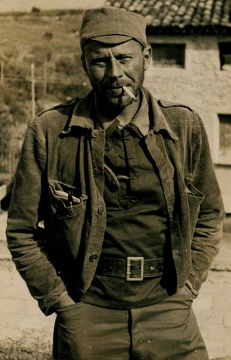

About Alvah Bessie
Alvah Cecil Bessie (June 4, 1904 – July 21, 1985) was an American novelist, journalist and screenwriter who was imprisoned for ten months and blacklisted by the movie studio bosses for being one of the group known as the Hollywood Ten. In 1938, Bessie fought in the "Abraham Lincoln Brigade", an all-volunteer unit of Americans who fought for the Republican side of the Spanish Civil War.
Best Alvah Bessie Quotes
Shortest
Earliest
Explore our curated collection of the most famous and impactful Alvah Bessie quotes.


“Those Americans who went to Spain to fight Franco and stave off World War II have never minded being called "premature anti-fascists." They were proud of the label.”
“Whenever the mind has led the body to an important decision, events have a way of assuming, momentarily, a half-symbolic nature. The mind plays that trick on you, and everything you see seems to partake of the quality of the decision you have made.”

“The free meal was bad, and 'Lopez' wasted a lot of time sending a cablegram signed 'Hy' to some one in America. But we got to the Committee at two, and sat on low benches in a lecture hall. There were other men there; one I recall who was wearing a blue beret and a leather glove on an obviously artificial hand. "You guys just get back?" he said, and we said, "No, we're just going." "Oh," he mumbled, "more suckers." We looked at him but he retired into himself, sitting in the back of the room for a time, and then suddenly leaving.”
“Hemingway did not seem discouraged, but Matthews was. Hemingway said, sure, they would get to the sea, but that was nothing to worry about. It had been foreseen; it would be taken care of; methods had already been worked out for communication between Catalonia and the rest of Spain; by ship, by plane, everything would be all right. Roosevelt, he said, had made an unofficial offer- or so he had been told- to ship two hundred planes to France, if France would ship two hundred planes to Spain. That was one of the best things we had ever heard of Roosevelt, but where were they?”
“"You know what I got half a mind to do?" the driver said. "What?" "Head this damn junk for the border." "Have a cigarette," I said. I wondered if he would head for the border and what I would do if he did, but he didn't. "The detail's all fucked-up," he said. "Where's the Lincoln? Where's the Macpap? The British? The Franco-Belge? Nobody's seen fuck-all of 'em. The bastards are driving to the sea," he said. "Maybe they've got to Tortosa already; we'll find out. If France don't come in now, we're fucked ducks. Mucho malo," he said. "Mucho fuckin malo."”

“The Swede who had walked in his sleep- he had not been wounded. Before we went into Batea he was in our peloton with Tabb and Moish Taubman and Johnson and Sid... He seemed to be stupid, but he wasn't. He never spoke, he never asked questions, but he had a face like a snake- he had the attentive expression of a reptile, pale, hard, unmoving eyes, a wide thin mouth, an impassive face. They said he had refused to retreat; he had set up his machine-gun on a hill, and told the others he was with, "Go on, I cover you." They left him there on the hill alone, his machine-gun banging away as the tanks came up.”

“We have long memories. We have developed a relative immunity to the endless barrage of propaganda, slander and outright lies that has been laid upon us. And especially, we are immune to the Big Lie that destroyed Spain and which Hitler developed to such a point of perfection that it was necessary for millions of human beings to die to achieve the defeat of the Axis. Yet the Big Lie survives and flourishes mightily in our own country today. As it is promulgated daily, hourly and every minute of the day through every medium of communication, so it must be answered- until our own people see it for what it is and explode it in their own good time.”
“We switched out the light and tried to sleep again; the windows were clouded with steam as the train shrieked along the tracks, and we thought of the thousands from all countries who had traveled this way before, and of those who had not come back. We thought of the volunteer organizations throughout the world that were helping to get these men to Spain; we thought of the men from Fascist countries, who had known the enemy at first hand, had escaped from their own countries and traveled thousands of miles to get to Spain to fight the enemy on another front, and who would have no homes if they survived the war. We were optimistic of the outcome.”

“Below us there were hundreds of men from the British, the Canadian Battalions; a food truck had come up, and they were being fed. A new Matford roadster drove around the hill and stopped near us, and two men got out we recognized. One was tall, thin, dressed in brown corduroy, wearing horn-shelled glasses. He had a long, ascetic face, firm lips, a gloomy look about him. The other was taller, heavy, red-faced, one of the largest men you will ever see; he worse steel-rimmed glasses and a bushy mustache. These were Herbert Matthews of The New York Times and Ernest Hemingway, and they were just as relieved to see us as we were to see them.”

“Whenever we hear it said that Communism threatens us from within and without; whenever we are told that the Soviet Union menaces our "way of life" and wants to conquer the world; whenever we are summoned to a Holy Crusade that- if it is allowed to begin- will ravish the entire earth, we recall the following simple facts of history:
Mussolini killed whatever democracy existed in Italy by claiming that Italy was threatened by Communism;
Hitler destroyed the German Republic with the same weapon;
Tojo broke the resistance of the people of Japan by using the identical thesis;
Franco murdered the Spanish Republic in the name of the "Red menace";
The Axis launched World War II under the slogan of saving the world from Communism.”

“And towering above each town, generally built on a height commanding it, stood the church, its finger pointed to heaven, its masonry rich and heavy, permanent and menacing, a constant reminder of the domination of the Church down all the ages. For although these deeply Catholic people had been burning their churches for centuries, the Church and its allies had always reasserted their power over the people, and this power was in dispute again to the endless hills, carved from root to summit with stone-shored terraces to hold the olives and the vine fields, quiet evidence of thousands upon thousands of grinding hours of man and woman labor. Sunny Spain, land of mañana, where nothing was done today that could be put off till tomorrow!”

“"I was four years in the war," Merkel said. "German army." "What was it like?" "It ain't bad," he said. "It ain't bad at all; you get used to it. You never see the enemy; you shoot and shoot and you never see 'em. It ain't bad at all." We talked of the World War and the Spanish War. Merkel told us that he had done underground work in Germany, and of the discontent among the German workers. "Every ship what comes to Hamburg," he said, "brings literature for 'em; they eat it up. I fight against Hitler, that bastard," he said. We talked of conditions back home; of Roosevelt's popularity and liberalism, and of the reactionary opposition they were trying to whip up again; of its chances of success. "In the end," Merkel said, "you can't fool the workers. Takes 'em maybe a long time to wake up with the newspapers saying lies all the time, but you can't fool 'em."”
“Every town along the Mediterranean shore was empty and deserted. The road was jam-packed with peasants evacuating toward the north, on mule-back, in donkey-carts, afoot. They looked at us in the cab of the truck, moving against the stream they made, and they kept moving. Hundreds were camped along the roads; hundreds were plodding north toward Barcelona, their few possessions, mattresses, blankets, household utensils, domestic stock, on their backs, in wheelbarrows or on their ''burros''' backs. Little children were walking, holding onto their mother's skirts; women carried babies; older children were driving goats, sheep; old men were helping old women along the road; their faces were impassive, dark with the dust of the roads and fields, lined and worn. Their eyes alone were bright but there was no expression in their eyes. Looking at them you knew what they were thinking: 'Franco is coming; Franco is coming.'”
“Hemingway was eager as a child, and I smiled remembering the first time I had seen him, at a Writers' Congress in New York. He was making his maiden public speech, and when it didn't read right, he got mad at it, repeating the sentences he had fumbled, with exceptional vehemence. Now he was like a big kid, and you liked him. He asked questions like a kid: "What then? What happened then? And what did you do? And what did he say? And then what did you do?" Matthews said nothing, but he took notes on a folded sheet of paper. "What's your name?" said Hemingway; I told him. "Oh," he said, "I'm awful glad to see you; I've read your stuff." I knew he was glad to see me; it made me feel good, and I felt sorry about the times I had lambasted him in print; I hoped he had forgotten them, or never read them. "Here," he said, reading in his pocket. "I've got more." He handed me a full pack of Lucky Strikes.”
“Here were students, dock-workers, clerks and labor-organizers, farmers. Most were unacquainted with each other, but they came together now with the warmth and familiarity of old friends; they told each other of their work in their respective countries; of their friends and families. They spoke of the European political scene, of the imperative necessity for the Loyalist Government to drive the foreign invader from Spain; you felt that with each of them, no matter how diverse his previous training, the Spanish struggle was a personal issue, something deep and close. This in itself, considering the disparity of their origin, was a major political phenomenon. They spoke no word of the actual business of war; they did not speculate on the nature of artillery or air attacks, of machine-gun fire. You felt: many of these men will never see their friends or families again; they don't know what they're getting into; their idealism has blinded them to the reality of what they will have to face. And you knew immediately that you were wrong; that they were so far from being blind that it might be said of them that they were among the first soldiers in the history of the world who really knew what they were about, what they were going to fight for- and that they were ready and eager to fight. Their very presence on the French frontier was an earnest of their understanding and their clarity; no one had made them come, no force but an inner force had brought them.”
Alvah Bessie Quotes by Topic
Find exactly what you are looking for by browsing this categorized list of Alvah Bessie quotes by topic.
Alvah Bessie on Spanish Civil War 9 quotes
“"Bring us Franco's balls!" the men shouted. "'e ain't got no bloody balls," a voice replied.”

Alvah Bessie on World War II 8 quotes
“Those Americans who went to Spain to fight Franco and stave off World War II have never minded being called "premature anti-fascists." They were proud of the label.”

Alvah Bessie on Artillery 3 quotes
“Ahead, muffled by distance, was the sound of artillery in the night- always more terrifying than it is by day, though less effective.”

Alvah Bessie on Spain 3 quotes
“The Spaniard is inherently nationalistic; but no more so than other national groups. Most people, trained from birth to distrust the foreigner, are nationalistic.”

Alvah Bessie on Soldiers 3 quotes
“Every soldier in every army is taught first off to be neat and clean, to keep his clothes in good repair, his buttons sewed on and his shoes polished, his face and hands and body washed, his beard shaved. He is respectful to his officers and stands at attention when he is addressed; he moves with precision about his business, walking as a soldier should, head up, chin in, arms at his sides.”

Alvah Bessie on Fear
“Fear is real and there is nothing you can do about it except to keep functioning, keep your hands and legs and body moving, your mind focused on the task at hand.”

Alvah Bessie on Bullying
Alvah Bessie on Heroes
“They were no iron men, but they were heroes. Seamen and clothing workers, clerks and artists, students and fathers of families. The phrase you heard so many times- 'united in a common cause'- it meant everything, and it meant nothing. For you could not hold an abstract idea in your mind at the front. You became aware at moments that the idea had never disappeared; that it was behind everything you did, behind the necessity you felt to do the job and do it well. It was something you did not talk about; it was something you took for granted.”

What Alvah Bessie Said About Others
Discover personal opinions Alvah Bessie shared regarding contemporaries.
Alvah Bessie on Francisco Franco 5 quotes
“"Bring us Franco's balls!" the men shouted. "'e ain't got no bloody balls," a voice replied.”
Alvah Bessie on Ernest Hemingway 3 quotes
“Hemingway did not seem discouraged, but Matthews was. Hemingway said, sure, they would get to the sea, but that was nothing to worry about. It had been foreseen; it would be taken care of; methods had already been worked out for communication between Catalonia and the rest of Spain; by ship, by plane, everything would be all right. Roosevelt, he said, had made an unofficial offer- or so he had been told- to ship two hundred planes to France, if France would ship two hundred planes to Spain. That was one of the best things we had ever heard of Roosevelt, but where were they?”

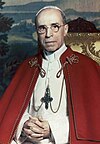
Alvah Bessie on Pope Pius XII
“In Rome, the Pope again deplored the bombing of civilian populations, but he was naïve- civilians are military objectives in our time.”
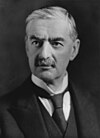
Alvah Bessie on Neville Chamberlain
“We were convinced that a major war was in the offing, what with the uncorrelated news before us of Schuschnigg's arrest by the Nazis, the fall of the French cabinet, Blum's formation of a new one, the mobilization of French troops on the border and the clamor of the British population for the resignation of Neville Chamberlain, who continued to place the interests of his class above the interests of his country.”
About Alvah Bessie
Alvah Cecil Bessie (June 4, 1904 – July 21, 1985) was an American novelist, journalist and screenwriter who was imprisoned for ten months and blacklisted by the movie studio bosses for being one of the group known as the Hollywood Ten. In 1938, Bessie fought in the "Abraham Lincoln Brigade", an all-volunteer unit of Americans who fought for the Republican side of the Spanish Civil War.