Link Copied!
Alphonse de Lamartine Quotes (1790-1869)
Writer, Poet, Politician

About Alphonse de Lamartine
Alphonse Marie Louise Prat de Lamartine (Alphonse-Marie-Louis de Prat de Lamartine) (October 21, 1790 – February 28, 1869) was a French writer, poet, and politician.
Best Alphonse de Lamartine Quotes
Shortest
Earliest
Explore our curated collection of the most famous and impactful Alphonse de Lamartine quotes.
“Experience is the only prophecy of wise men.”

“Sometimes, only one person is missing, and the whole world seems depopulated.”
“The more I see of the representatives of the people, the more I admire my dogs.”


“What is our life but a succession of preludes to that unknown song whose first solemn note is sounded by death?”
“O time, arrest your flight! and you, propitious hours, arrest your course! Let us savor the fleeting delights of our most beautiful days!”
“Silence is the winding-sheet of the past: it is sometimes impious, often dangerous to raise it. But even when it is raised piously and lovingly, the first moment is a cruel one.”
“Si la grandeur du dessein, la petitesse des moyens, l'immensité du résultat sont les trois mesures du génie de l'homme, qui osera comparer humainement un grand homme de l'histoire moderne à Mahomet?”
“The doctrine of the cynics is the Ideal reversed, the parody of physical and moral beauty, the crime of mind, the degradation of imagination. I could not take pleasure in it. There was too much enthusiasm within me to permit me to crawl through those sinks of the brain. My nature had wings. The dangers to which I was exposed were above, not below.”

“Until the age of twelve, then, I only lived on bread, milk-food, vegetables, and fruit. My health was not less robust on this account, nor my growth less rapid, and it was to this diet, perhaps, that I was indebted for that purity of feature, that exquisite sensibility of feeling, and that serene gentleness of humor and character which I had preserved up to that period.”

“My mother took me to town with her, and made me pass, as if by accident, through the yard of a slaughter-house. I saw some men, their arms naked and besmeared with blood, knocking a bull in the head; others cutting the throats of calves and sheep, and separating their still heaving limbs. Streams of smoking gore ran along the pavement. An intense feeling of pity, mingled with horror, seized upon me. I asked to be led away quickly. The thought of these scenes, the necessary preliminaries of one of those dishes of meat which I had so often seen on the table, made me take a disgust to animal food and inspired me with a horror for butchers.”
“My God! I have often regretted that I was born! I have often wished to fall back even into nothingness, rather than advance through so many falsehoods, so many sufferings, and so many successive losses, towards that loss of ourselves which we call death! Still, even in those moments of terrible faintheartedness, when despair overmasters reason, and when man forgets that life is a task imposed upon him to finish, I have always said to myself: "There are some things which I would regret not to have tasted — a mother's milk, a father's love, that relationship of heart and soul between brothers, household affections, joys, and even cares!" Our family is evidently our second self, more than self, existing before self, and surviving self with the better part of self. It is the image of the holy and loving unity of beings revealed by the small group of creatures who hold to one another, and made visible by feeling!”

“My mother was convinced, and on this head I have retained her firm belief, that to kill animals for the purpose of feeding on their flesh is one of the most deplorable and shameful infirmities of the human state; that it is one of those curses cast upon man either by his fall, or by the obduracy of his own perversity. She believed, and I am of the same belief, that these habits of hard-heartedness towards the gentlest animals, our companions, our auxiliaries, our brethren in toil and even in affection here below; that these immolations, these sanguinary appetites, this sight of palpitating flesh, are calculated to brutalize the instincts of the heart and make them ferocious. She believed, and I am of the same belief, that this nurture, which is seemingly much more succulent and much more energetic, contains in itself active causes of irritation and putridity, which sour the blood and shorten the days of mankind. In support of these ideas of abstinence, she quoted the innumerable gentle and pious tribes of India who deny themselves all that has had life; and the strong and healthy races of the shepherds and even of the laboring classes of our fields.”

“Never has a man set for himself, voluntarily or involuntarily, a more sublime aim, since this aim was super human; to subvert superstitions which had been imposed between man and his Creator, to render God unto man and man unto God; to restore the rational and sacred idea of divinity amidst the chaos of the material and disfigured gods of idolatry, then existing. Never has a man undertaken a work so far beyond human power with so feeble means, for he Muhammad had in the conception as well as in the execution of such a great design, no other instrument than himself and no other aid except a handful of men living in a corner of the desert. Finally, never has a man accomplished such a huge and lasting revolution in the world, because in less than two centuries after its appearance, Islam, reigned over the whole of Arabia, and conquered, in God's name, Persia, Khorasan, Transoxania, Western India, Syria, Egypt, Abyssinia, all the known continent of Northern Africa, numerous islands of the Mediterranean Sea, Spain and part of Gaul.
If greatness of purpose, smallness of means, and astounding results are the three criteria of human genius, who could dare to compare any great man in modern history with Muhammad? The most famous men created arms, laws and empires only. They founded, if anything at all, no more than material powers which often crumbled away before their eyes. This man moved not only armies, legislations, empires, peoples and dynasties, but millions of men in one-third of the then inhabited world; and more than that, he moved the altars, the gods, the religions, the ideas, the beliefs and souls. . . his forbearance in victory, his ambition, which was entirely devoted to one idea and in no manner striving for an empire; his endless prayers, his mystic conversations with God, his death and his triumph after death; all these attest not to an imposture but to a firm conviction which gave him the power to restore a dogma. This dogma was twofold, the unity of God and the immateriality of God; the former telling what God is, the latter telling what God is not; the one overthrowing false gods with the sword, the other starting an idea with words.
Philosopher, orator, apostle, legislator, warrior, conqueror of ideas, restorer of rational dogmas, of a cult without images; the founder of twenty terrestrial empires and of one spiritual empire, that is Muhammad. As regards all standards by which human greatness may be measured, we may well ask, is there any man greater than he?”

Alphonse de Lamartine Quotes by Topic
Find exactly what you are looking for by browsing this categorized list of Alphonse de Lamartine quotes by topic.
Alphonse de Lamartine on Vegetarianism 3 quotes
“Until the age of twelve, then, I only lived on bread, milk-food, vegetables, and fruit. My health was not less robust on this account, nor my growth less rapid, and it was to this diet, perhaps, that I was indebted for that purity of feature, that exquisite sensibility of feeling, and that serene gentleness of humor and character which I had preserved up to that period.”

Alphonse de Lamartine on Absence
“Sometimes, when one person is missing, the whole world seems depopulated.”
Alphonse de Lamartine on Man
Alphonse de Lamartine on Government
“This end (Robespierre's theories) was the representative sovereignty of all the citizens concentrated in an election as extensive as the people themselves, and acting by the people, and for the people in an elective council, which should be all the government.”

Alphonse de Lamartine on Family
“My God! I have often regretted that I was born! I have often wished to fall back even into nothingness, rather than advance through so many falsehoods, so many sufferings, and so many successive losses, towards that loss of ourselves which we call death! Still, even in those moments of terrible faintheartedness, when despair overmasters reason, and when man forgets that life is a task imposed upon him to finish, I have always said to myself: "There are some things which I would regret not to have tasted — a mother's milk, a father's love, that relationship of heart and soul between brothers, household affections, joys, and even cares!" Our family is evidently our second self, more than self, existing before self, and surviving self with the better part of self. It is the image of the holy and loving unity of beings revealed by the small group of creatures who hold to one another, and made visible by feeling!”

Alphonse de Lamartine on Human
“Society is composed only of various conditions, professions, functions, and ways of life, among those who form what we call a Nation; of proprietors of the soil, and proprietors of houses; of investments, of handicrafts, of merchants, of manufacturers, of formers; of day-laborers becoming fanners, manufacturers, merchants, or possessors of houses or capital, in their turn; of the rich, of those in easy circumstances, of the poor, of workmen with their hands, workmen with their minds; of day-laborers, of those in need, of a small number of men enjoying considerable acquired or inherited wealth, of others of a smaller fortune painfully increased and improved, of others with property only sufficient for their needs; there are some, finally, without any personal possession but their hands, and gleaning for themselves and for their families, in the workshop, or the field, and at the threshold of the homes of others on the earth, the asylum, the wages, the bread, the instruction, the tools, the daily pay, all those means of existence which they have neither inherited, saved, nor acquired. These last are what have been improperly called the People.”

What Alphonse de Lamartine Said About Others
Discover personal opinions Alphonse de Lamartine shared regarding contemporaries.
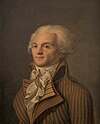
Alphonse de Lamartine on Maximilien Robespierre
“He was the last word of the Revolution, but nobody could read it”
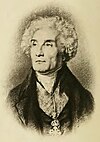
Alphonse de Lamartine on Joseph de Maistre
“That brief, nervous, lucid style, stripped of phrases, robust of limb, did not at all recall the softness of the eighteenth century, nor the declamations of the latest French books: it was born and steeped in the breath of the Alps; it was virgin, it was young, it was harsh and savage; it had no human respect, it felt its solitude; it improvised depth and form all at once… That man was new among the enfants du siècle [children of the century].”
Alphonse de Lamartine on Muhammad
“Never has a man set for himself, voluntarily or involuntarily, a more sublime aim, since this aim was super human; to subvert superstitions which had been imposed between man and his Creator, to render God unto man and man unto God; to restore the rational and sacred idea of divinity amidst the chaos of the material and disfigured gods of idolatry, then existing. Never has a man undertaken a work so far beyond human power with so feeble means, for he Muhammad had in the conception as well as in the execution of such a great design, no other instrument than himself and no other aid except a handful of men living in a corner of the desert. Finally, never has a man accomplished such a huge and lasting revolution in the world, because in less than two centuries after its appearance, Islam, reigned over the whole of Arabia, and conquered, in God's name, Persia, Khorasan, Transoxania, Western India, Syria, Egypt, Abyssinia, all the known continent of Northern Africa, numerous islands of the Mediterranean Sea, Spain and part of Gaul. If greatness of purpose, smallness of means, and astounding results are the three criteria of human genius, who could dare to compare any great man in modern history with Muhammad? The most famous men created arms, laws and empires only. They founded, if anything at all, no more than material powers which often crumbled away before their eyes. This man moved not only armies, legislations, empires, peoples and dynasties, but millions of men in one-third of the then inhabited world; and more than that, he moved the altars, the gods, the religions, the ideas, the beliefs and souls. . . his forbearance in victory, his ambition, which was entirely devoted to one idea and in no manner striving for an empire; his endless prayers, his mystic conversations with God, his death and his triumph after death; all these attest not to an imposture but to a firm conviction which gave him the power to restore a dogma. This dogma was twofold, the unity of God and the immateriality of God; the former telling what God is, the latter telling what God is not; the one overthrowing false gods with the sword, the other starting an idea with words. Philosopher, orator, apostle, legislator, warrior, conqueror of ideas, restorer of rational dogmas, of a cult without images; the founder of twenty terrestrial empires and of one spiritual empire, that is Muhammad. As regards all standards by which human greatness may be measured, we may well ask, is there any man greater than he?”

Quotes About Alphonse de Lamartine
Gain deeper perspective through quotes about Alphonse de Lamartine from others.
Arthur Rimbaud on Alphonse de Lamartine
“The first romantics were seers without even really realizing it: their soul’s education began by accident: abandoned trains still smoking, occasionally taking to the tracks. Lamartine was a seer now and again, but strangling on old forms. Hugo, too pigheaded, certainly saw in his most recent works: Les Misérables is really a poem. I’ve got Les Chatiments with me; Stella gives some sense of Hugo’s vision. Too much Belmontet and Lamennais with their Jehovahs and colonnades, massive crumbling edifices.”

Lord Curzon on Alphonse de Lamartine
“Lamartine, at the Hotel de Ville, in Paris, in 1848, produced an instantaneous effect that few orators have surpassed.”
About Alphonse de Lamartine
Alphonse Marie Louise Prat de Lamartine (Alphonse-Marie-Louis de Prat de Lamartine) (October 21, 1790 – February 28, 1869) was a French writer, poet, and politician.