Link Copied!
Alfred the Great Quotes (849-899)
King
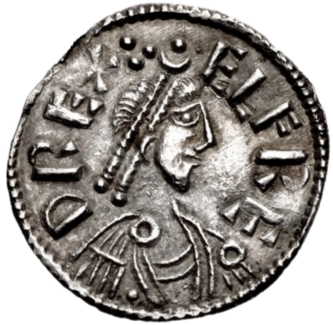
About Alfred the Great
Ælfrēd or Alfred the Great (849–26 October 899), king of Wessex from 871 to 899, was responsible for turning back the Danish invasion of Wessex and for promoting a revival of education, scholarship, law and administration. His translations of theological and philosophical works into Old English are sometimes said to have laid the foundations of English prose.
Best Alfred the Great Quotes
Shortest
Earliest
Explore our curated collection of the most famous and impactful Alfred the Great quotes.

“He seems to me a very foolish man, and very wretched, who will not increase his understanding while he is in the world, and ever wish and long to reach that endless life where all shall be made clear.”

“Ða ic ða gemunde hu sio Lar Lædengeðiodes ær ðissum afeallen wæs giond Angelcynn, ond ðeah monige cuðon Englisc gewrit arædan, ða ongan ic on gemang oðrum mislicum ond manigfealdum bisgum ðisses kynerices ða boc on Englisc ðe is genemned on Læden Pastoralis, ond on Englisc "Hierdeboc", hwilum word be worde, hwilum andgit of andgite.”
“Me com swiðe oft on gemynd, hwelce wiotan iu wæron giond Angelcynn, ægðer ge godcundra hada ge woruldcundra; ond hu gesæliglica tida ða wæron giond Angelcynn; ond hu ða kyningas ðe ðone onwald hæfdon ðæs folces Gode ond his ærendwrecum hiersumedon; ond hie ægðer ge hiora sibbe ge hiora siodu ge hiora onweald innanbordes gehioldon, ond eac ut hiora eðel rymdon; ond hu him ða speow ægðer ge mid wige ge mid wisdome; ond eac ða godcundan hadas, hu giorne hie wæron ægðer ge ymb lare ge ymb liornunga, ge ymb ealle ða ðiowotdomas ðe hie Gode don scoldon; ond hu man utanbordes wisdom ond lare hieder on lond sohte; ond hu we hie nu sceoldon ute begietan, gif we hie habban sceoldon.”
Alfred the Great Quotes by Topic
Find exactly what you are looking for by browsing this categorized list of Alfred the Great quotes by topic.
Alfred the Great on Doom
Quotes About Alfred the Great
Gain deeper perspective through quotes about Alfred the Great from others.
Anonymous dedication on on Alfred the Great
“ALFRED The Light of a Benighted Age Was a Philosopher and a Christian The Father of his People The Founder of the English MONARCHY and LIBERTY.”
From the cradle onwards, in spite of all the demands of the present life, it has been the desire for wisdom, more than anything else, together with the nobility of his birth, which have characterized the nature of his noble mind. on Alfred the Great
“Cui ab incunabulis ante omnia et cum omnibus praesentis vitae studiis, sapientiae desiderium cum nobilitate generis, nobilis mentis ingenium supplevit.”
"Alfred the Great" in the on Alfred the Great
“In the parts of Mercia acquired by Alfred, the shire system seems now to have been introduced for the first time. This is the one grain of truth in the legend that Alfred was the inventor of shires, hundreds and tithings. … The Celtic principality in Cornwall, which seems to have survived at least till 926, must long have been practically dependent on Wessex. … We come now to what is in many ways the most interesting of Alfred’s works, his translation of Boethius’ Consolation of Philosophy, the most popular philosophical manual of the middle ages. Here again Alfred deals very freely with his original and though the late Dr G. Schepss showed that many of the additions to the text are to be traced not to Alfred himself, but to the glosses and commentaries which he used, still there is much in the work which is solely Alfred’s and highly characteristic of his genius. It is in the Boethius that the oft-quoted sentence occurs: “My will was to live worthily as long as I lived, and after my life to leave to them that should come after, my memory in good works.” … The last of Alfred’s works is one to which he gave the title Blostman, i.e. “Blooms” or Anthology. The first half is based mainly on the Soliloquies of St Augustine, the remainder is drawn from various sources, and contains much that is Alfred’s own and highly characteristic of him. The last words of it may be quoted; they form a fitting epitaph for the noblest of English kings. “Therefore he seems to me a very foolish man, and very wretched, who will not increase his understanding while he is in the world, and ever wish and long to reach that endless life where all shall be made clear.” … How Alfred passed to “the life where all things are made clear” we do not know. The very year is uncertain. The arguments on the whole are in favour of 900. The day was the 26th of October. Alike for what he did and for what he was, there is none to equal Alfred in the whole line of English sovereigns; and no monarch in history ever deserved more truly the epithet of Great.”
G. K. Chesterton on Alfred the Great 6 quotes
“Yet Alfred is no fairy tale; His days as our days ran, He also looked forth for an hour On peopled plains and skies that lower, From those few windows in the tower That is the head of a man.”


Misattributed Quotes
Quotes mistakenly credited to Alfred the Great
“For hit seide þe king Alfred:
"Selde erendeð wel þe loþe,
an selde plaideð wel þe wroþe."”
"Selde erendeð wel þe loþe,
an selde plaideð wel þe wroþe."”
“So mon mai welþe
lengest helden,
giu þu neuere leuen
alle monnis spechen,
ne alle the þinke
þat þu herest sinken.”
lengest helden,
giu þu neuere leuen
alle monnis spechen,
ne alle the þinke
þat þu herest sinken.”
“Ne ches þe neuere to fere
littele mon ne long ne red...
Þe luttele mon he his so rei,
ne mai non him wonin nei...
Þe lonke mon is leþe bei,
selde comid is herte rei...
Þe rede mon he is a quet,
for he wole þe þin iwil red
he is cocker, þef and horeling,
scolde, of wrechedome he is king...”
littele mon ne long ne red...
Þe luttele mon he his so rei,
ne mai non him wonin nei...
Þe lonke mon is leþe bei,
selde comid is herte rei...
Þe rede mon he is a quet,
for he wole þe þin iwil red
he is cocker, þef and horeling,
scolde, of wrechedome he is king...”
About Alfred the Great
Ælfrēd or Alfred the Great (849–26 October 899), king of Wessex from 871 to 899, was responsible for turning back the Danish invasion of Wessex and for promoting a revival of education, scholarship, law and administration. His translations of theological and philosophical works into Old English are sometimes said to have laid the foundations of English prose.