Every man has seen the wall that limits his mind.
• Poèmes philosophiques, "La flute", line 108; (ed.) Paul Viallaneix Oeuvres complètes (1965) p. 103; translation from Jason Merchey Values of the Wise (2004) p. 200. (1843).
• Poèmes philosophiques, "La flute", line 108; (ed.) Paul Viallaneix Oeuvres complètes (1965) p. 103; translation from Jason Merchey Values of the Wise (2004) p. 200. (1843).
“
Tout homme a vu le mur qui borne son esprit.
— Alfred de Vigny
What It Means
This is a placeholder explanation generated by the low-overhead model. It interprets "Tout homme a vu le mur qui borne son esprit." in the context of "Every man has seen the wall that limits his mind.
• Poèmes philosophiques, "La flute", line 108; (ed.) Paul Viallaneix Oeuvres complètes (1965) p. 103; translation from Jason Merchey Values of the Wise (2004) p. 200. (1843)." to mean that wisdom is timeless.
Source: Wikiquote: "Alfred de Vigny" (Quotes)
The 'What it means' explanation text was generated by Google Gemini Flash (accessed January 18, 2026). https://gemini.google.com/app
About Alfred de Vigny
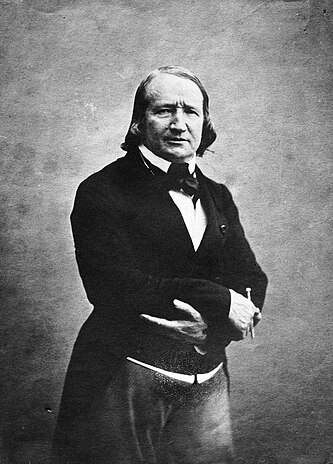
Alfred Victor de Vigny (March 27 1797 – September 17 1863) was a poet, playwright, and novelist. Until the rise of Victor Hugo he was considered to be the leader of the Romantic movement in France.
About Alfred de Vigny
Alfred Victor de Vigny (March 27 1797 – September 17 1863) was a poet, playwright, and novelist. Until the rise of Victor Hugo he was considered to be the leader of the Romantic movement in France.
View all quotes →