[Tr. John Lukacs, At the End of an Age (2002)]
Une hypothèse qui permet de prévoir certains effets qui se reproduisent toujours ressemble absolument à une vérité démontrée. Le système de Newton ne repose guère sur un autre fondement. Si en réalité et de l aveu du. [A hypothesis which permits the prediction of certain effects that always reoccur under certain conditions does, in its way amount to a demonstrable certainty. Even the Newtonian system had no more than such a foundation.]
What It Means
This is a placeholder explanation generated by the low-overhead model. It interprets "Une hypothèse qui permet de prévoir certains effets qui se reproduisent toujours ressemble absolument à une vérité démontrée. Le système de Newton ne repose guère sur un autre fondement. Si en réalité et de l aveu du. [A hypothesis which permits the prediction of certain effects that always reoccur under certain conditions does, in its way amount to a demonstrable certainty. Even the Newtonian system had no more than such a foundation.]" in the context of "Alexis de Tocqueville, Letter to de Gobineau (August 5, 1858) Correspondance entre Alexis de Tocqueville et Arthur de Gobineau 1843-1859 (1908) p. 330.
[Tr. John Lukacs, At the End of an Age (2002)]" to mean that wisdom is timeless.
Tags
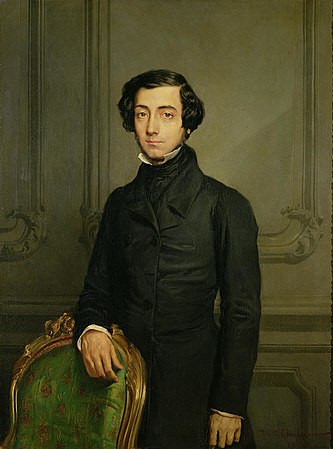
About Alexis de Tocqueville