Alexander Pope, Prologue to Addison's Cato, line 1.
“
To wake the soul by tender strokes of art, To raise the genius, and to mend the heart; To make mankind, in conscious virtue bold, Live o'er each scene, and be what they behold— For this the tragic Muse first trod the stage.
— Alexander Pope on Acting
What It Means
This is a placeholder explanation generated by the low-overhead model. It interprets "To wake the soul by tender strokes of art, To raise the genius, and to mend the heart; To make mankind, in conscious virtue bold, Live o'er each scene, and be what they behold— For this the tragic Muse first trod the stage." in the context of "Alexander Pope, Prologue to Addison's Cato, line 1." to mean that wisdom is timeless.

Source: Wikiquote: "Acting" (Y, Hoyt's New Cyclopedia Of Practical Quotations: Quotes reported in Hoyt's New Cyclopedia Of Practical Quotations (1922), p. 4-6.)
The 'What it means' explanation text was generated by Google Gemini Flash (accessed January 18, 2026). https://gemini.google.com/app
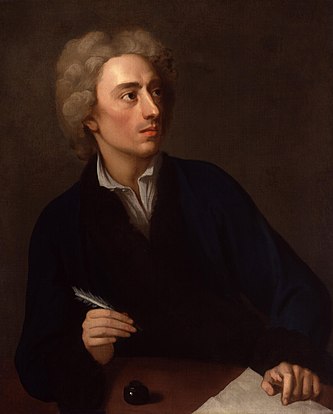
About Alexander Pope
Alexander Pope (21 May 1688 – 30 May 1744) was a poet and satirist of the Augustan period and one of its greatest artistic exponents. Considered the foremost English poet of the early 18th century and a master of the heroic couplet, he is best known for satirical and discursive poetry.
View all quotes →