Alexander Pope, An Essay on Man (1733-34), Epistle II, line 117.
“
Love, Hope, and Joy, fair pleasure's smiling train, Hate, Fear, and Grief, the family of pain, These mix'd with art, and to due bounds confin'd Make and maintain the balance of the mind.
— Alexander Pope on Mind
What It Means
This is a placeholder explanation generated by the low-overhead model. It interprets "Love, Hope, and Joy, fair pleasure's smiling train, Hate, Fear, and Grief, the family of pain, These mix'd with art, and to due bounds confin'd Make and maintain the balance of the mind." in the context of "Alexander Pope, An Essay on Man (1733-34), Epistle II, line 117." to mean that wisdom is timeless.

Source: Wikiquote: "Mind" (Hoyt's New Cyclopedia Of Practical Quotations: Quotes reported in Hoyt's New Cyclopedia Of Practical Quotations (1922), p. 513-16.)
The 'What it means' explanation text was generated by Google Gemini Flash (accessed January 18, 2026). https://gemini.google.com/app
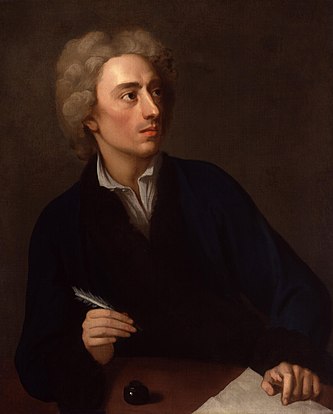
About Alexander Pope
Alexander Pope (21 May 1688 – 30 May 1744) was a poet and satirist of the Augustan period and one of its greatest artistic exponents. Considered the foremost English poet of the early 18th century and a master of the heroic couplet, he is best known for satirical and discursive poetry.
View all quotes →