Letter to Edward Blount (27 August 1714); a similar expression in "Thoughts on Various Subjects" in Swift's Miscellanies (1727): Party is the madness of many, for the gain of a few.
“
I find myself just in the same situation of mind you describe as your own, heartily wishing the good, that is the quiet of my country, and hoping a total end of all the unhappy divisions of mankind by party-spirit, which at best is but the madness of many for the gain of a few.
— Alexander Pope
What It Means
This is a placeholder explanation generated by the low-overhead model. It interprets "I find myself just in the same situation of mind you describe as your own, heartily wishing the good, that is the quiet of my country, and hoping a total end of all the unhappy divisions of mankind by party-spirit, which at best is but the madness of many for the gain of a few." in the context of "Letter to Edward Blount (27 August 1714); a similar expression in "Thoughts on Various Subjects" in Swift's Miscellanies (1727): Party is the madness of many, for the gain of a few." to mean that wisdom is timeless.
Source: Wikiquote: "Alexander Pope" (Quotes)
The 'What it means' explanation text was generated by Google Gemini Flash (accessed January 18, 2026). https://gemini.google.com/app
Tags
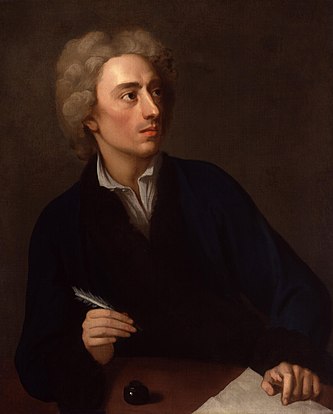
About Alexander Pope
Alexander Pope (21 May 1688 – 30 May 1744) was a poet and satirist of the Augustan period and one of its greatest artistic exponents. Considered the foremost English poet of the early 18th century and a master of the heroic couplet, he is best known for satirical and discursive poetry.
View all quotes →