I am of course confident that I will fulfil my tasks as a writer in all circumstances — from my grave even more successfully and more irrefutably than in my lifetime. No one can bar the road to truth, and to advance its cause I am prepared to accept even death. But may it be that repeated lessons will finally teach us not to stop the writer’s pen during his lifetime? At no time has this ennobled our history.
What It Means
This is a placeholder explanation generated by the low-overhead model. It interprets "I am of course confident that I will fulfil my tasks as a writer in all circumstances — from my grave even more successfully and more irrefutably than in my lifetime. No one can bar the road to truth, and to advance its cause I am prepared to accept even death. But may it be that repeated lessons will finally teach us not to stop the writer’s pen during his lifetime? At no time has this ennobled our history." in the context of "Open letter to the Fourth Soviet Writers’ Congress (16 May 1967); as translated in Solzhenitsyn: A Documentary Record (1970) edited by Leopold Labedz (1970)" to mean that wisdom is timeless.
Tags
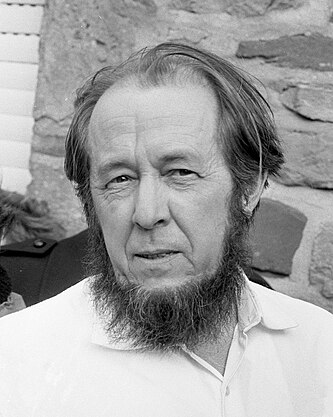
About Aleksandr Solzhenitsyn