To say that the fragment on "The Aims of Jesus and His Disciples" is a magnificent piece of work is barely to do it justice. This essay is not only one of the greatest events in the history of criticism, it is also a masterpiece of general literature. The language is as a rule crisp and terse, pointed and epigrammatic—the language of a man who is not "engaged in literary composition" but is wholly concerned with the facts. At times, however, it rises to heights of passionate feeling, and then it is as though the fires of a volcano were painting lurid pictures upon dark clouds. Seldom has there been a hate so eloquent, so lofty a scorn; but then it is seldom that a work has been written in the just consciousness of so absolute a superiority to contemporary opinion. And withal, there is dignity and serious purpose; Reimarus' work is no pamphlet.
What It Means
This is a placeholder explanation generated by the low-overhead model. It interprets "To say that the fragment on "The Aims of Jesus and His Disciples" is a magnificent piece of work is barely to do it justice. This essay is not only one of the greatest events in the history of criticism, it is also a masterpiece of general literature. The language is as a rule crisp and terse, pointed and epigrammatic—the language of a man who is not "engaged in literary composition" but is wholly concerned with the facts. At times, however, it rises to heights of passionate feeling, and then it is as though the fires of a volcano were painting lurid pictures upon dark clouds. Seldom has there been a hate so eloquent, so lofty a scorn; but then it is seldom that a work has been written in the just consciousness of so absolute a superiority to contemporary opinion. And withal, there is dignity and serious purpose; Reimarus' work is no pamphlet." in the context of "Albert Schweitzer, The Quest of the Historical Jesus (1910), p. 15" to mean that wisdom is timeless.

Tags
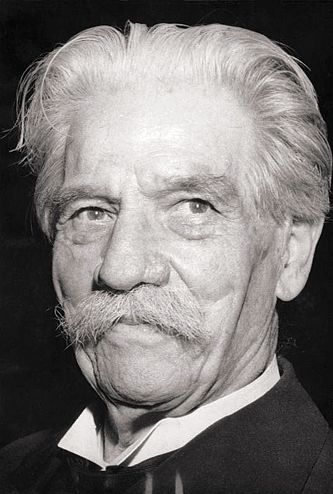
About Albert Schweitzer