Albert Einstein, Why Socialism? (1949)
“
Under existing conditions, private capitalists inevitably control, directly or indirectly, the main sources of information (press, radio, education). It is thus extremely difficult, and indeed in most cases quite impossible, for the individual citizen to come to objective conclusions and to make intelligent use of his political rights.
— Albert Einstein on Capitalism
What It Means
This is a placeholder explanation generated by the low-overhead model. It interprets "Under existing conditions, private capitalists inevitably control, directly or indirectly, the main sources of information (press, radio, education). It is thus extremely difficult, and indeed in most cases quite impossible, for the individual citizen to come to objective conclusions and to make intelligent use of his political rights." in the context of "Albert Einstein, Why Socialism? (1949)" to mean that wisdom is timeless.
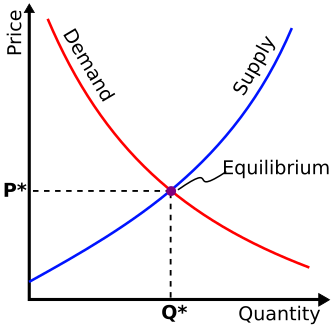
Source: Wikiquote: "Capitalism" (E)
The 'What it means' explanation text was generated by Google Gemini Flash (accessed February 08, 2026). https://gemini.google.com/app
Tags
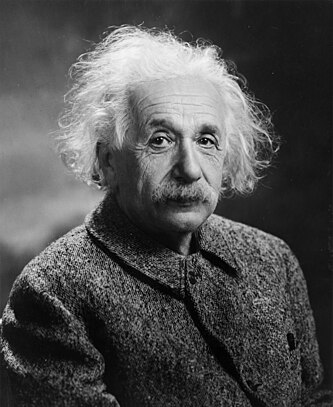
About Albert Einstein
Albert Einstein (14 March 1879 – 18 April 1955) was a Jewish German theoretical physicist, widely acknowledged to be one of the greatest physicists of all time. Einstein is known for developing the theory of relativity, but he also made important contributions to the development of the theory of quantum mechanics. Together, relativity and quantum mechanics are the two pillars of modern physics. He won the 1921 Nobel Prize in Physics for his explanation of the photoelectric effect.
View all quotes →