I have repeatedly said that in my opinion the idea of a personal God is a childlike one. You may call me an agnostic, but I do not share the crusading spirit of the professional atheist whose fervor is mostly due to a painful act of liberation from the fetters of religious indoctrination received in youth. I prefer an attitude of humility corresponding to the weakness of our intellectual understanding of nature and of our own being.
What It Means
This is a placeholder explanation generated by the low-overhead model. It interprets "I have repeatedly said that in my opinion the idea of a personal God is a childlike one. You may call me an agnostic, but I do not share the crusading spirit of the professional atheist whose fervor is mostly due to a painful act of liberation from the fetters of religious indoctrination received in youth. I prefer an attitude of humility corresponding to the weakness of our intellectual understanding of nature and of our own being." in the context of "Albert Einstein, in a letter to Guy H. Raner Jr. (28 September 1949), from article by Michael R. Gilmore in Skeptic magazine, Vol. 5, No. 2 (1997)" to mean that wisdom is timeless.

Tags
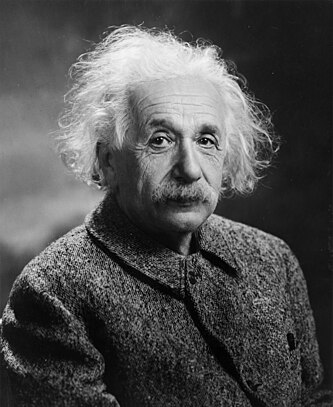
About Albert Einstein