The execution of the accursed kafir of Gobindwal [Sikh leader] is an important achievement and is the cause of great defeat of the accursed Hindus.' Whatever might have been the motive behind the execution, the dishonour of the kafirs is an act of highest grace for the Muslims. Before the execution of the kafirs I had seen in a vision that the Emperor had destroyed the crown of the head of Shirk. Verily he was the chief of the Mushriks and the leader of the kafirs.
What It Means
This is a placeholder explanation generated by the low-overhead model. It interprets "The execution of the accursed kafir of Gobindwal [Sikh leader] is an important achievement and is the cause of great defeat of the accursed Hindus.' Whatever might have been the motive behind the execution, the dishonour of the kafirs is an act of highest grace for the Muslims. Before the execution of the kafirs I had seen in a vision that the Emperor had destroyed the crown of the head of Shirk. Verily he was the chief of the Mushriks and the leader of the kafirs." in the context of "Sirhindi, In a letter to Shaikh Farid Bukhari. Bostom, A. G. M. D., & Bostom, A. G. (2010). The Legacy of Jihad: Islamic Holy War and the Fate of Non-Muslims. Amherst: Prometheus. quoting from S.A.A. Rizvi, Muslim Revivalist Movements in Northern India in the Sixteenth and Seventeenth Centuries, Agra, 1965, Y. Friedman, Shaykh Ahmad Sirhindi: An outline, 1971. also in Jain, M. (2010). Parallel pathways: Essays on Hindu-Muslim relations, 1707-1857." to mean that wisdom is timeless.
Tags
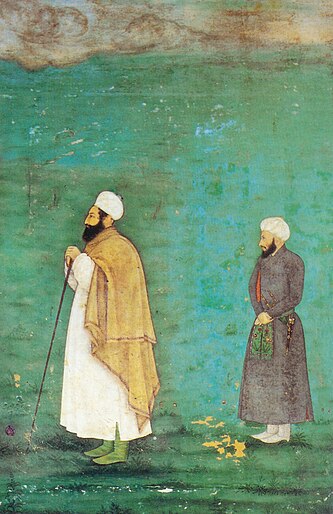
About Ahmad Sirhindi